




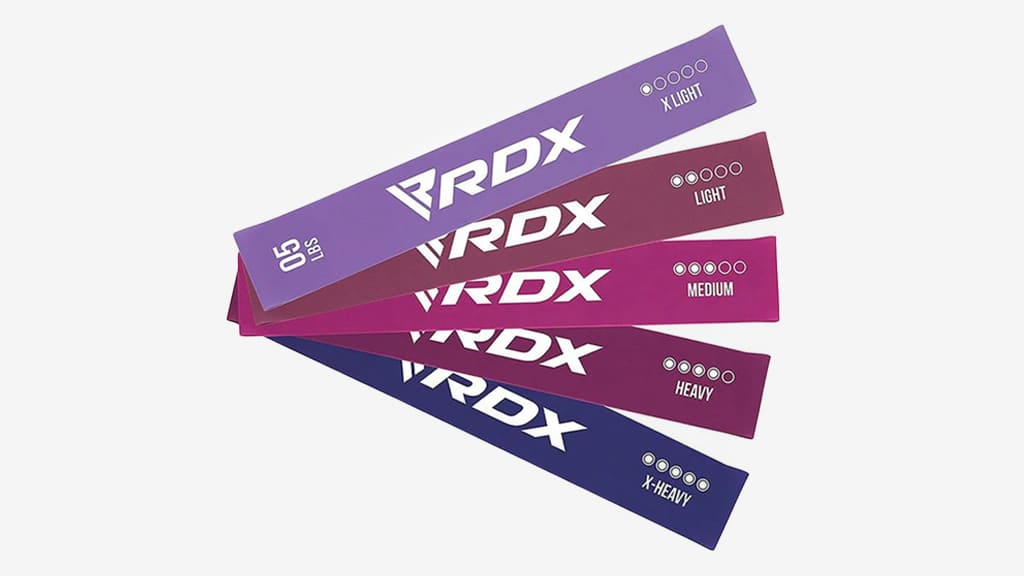
They’re joint-friendly, lightweight, and give adjustable resistance that fits your level. A solid chest workout using resistance bands hits the same fibers you’d target with presses and flys in a gym. You just need the right moves and smart form.
With proper control, bands mimic free weights. They challenge your pecs throughout the full range, especially at the peak contraction. That’s why resistance bands for strength training work so well even for experienced lifters.
Let’s break down how to get chest gains without ever touching a barbell.
Why Resistance Bands Are Effective for Chest Growth?


Resistance bands are more than just a backup plan. According to a 2010 study published in the Journal of Strength and Conditioning Research, training with elastic bands produced comparable muscle activation in the chest and triceps when compared to using free weights. That means your strength and size goals do not need to rely on heavy equipment.
The magic is in the variable resistance. As the band stretches, it increases the tension through the movement. That rising resistance builds intensity where your chest works hardest at the point of full contraction. It’s an advantage traditional weights often lack.
Bands also challenge your stability. Each rep demands more from your core and surrounding muscles to stay controlled. This makes the gains more functional and less joint-stressing. On top of that, bands are easy to carry and quick to set up anywhere.
With these proven benefits of resistance bands, and a real understanding of the muscles worked in chest workout routines, you can get serious results with nothing but bands and effort.
Related Article: How to Add Variety to Your Workouts with Resistance Bands
Top Chest Exercises with Resistance Bands

You do not need a gym full of gear to sculpt a powerful chest. A single band can unlock pressing, fly, and push variations that target every fiber of your pecs. With smart angles and solid effort, these moves will push your chest like any dumbbell or cable. Focus on tension, control, and full range to get the most out of each rep.
Band Resisted Push-Ups
Wrap the band around your upper back and trap the ends under your palms. As you lower into a pushup, the resistance builds. Drive up with explosive power while keeping your core tight. These resistance band pushups simulate bench press loading while challenging stability and range.
Resistance Band Chest Fly
Anchor the band at mid-chest height behind you. With a soft bend in the elbows, sweep your arms inward and squeeze your chest hard. The chest fly with resistance bands gives constant resistance from stretch to lockout, working deep muscle fibers other tools often miss.
Wrap-Around Press
Stand upright and wrap the band around your back, holding both ends at chest level. Press straight forward with intent, like pushing a heavy bar. This move is one of the best chest exercises with bands because it mimics bench press mechanics in a standing position.
Upper Chest Pullover with Band Anchor
Anchor the band high behind your head. Keep arms extended and sweep forward and down across your torso. It starts like a lat pullover, but shifts tension to the upper pecs. You feel the lift and stretch as it flows through the top chest line.
Crossover Push-Up
Anchor the band low and loop it diagonally across your torso. As you push up, drive across the centerline of your body. This forces extra chest activation and makes each pushup way harder. It adds a unique burn you will not get from floor work alone.
Sample Portable Chest Workout Plan
No bench, or rack? No problem. This portable chest workout needs only one band and a bit of space. You’ll hit all angles of the chest with time under tension, active recovery, and smart sequencing. Whether you’re training in a living room, park, or travel room, this chest workout at home gets real results without heavy gear.
Start with 5 to 10 minutes of mobility. Use band pull-aparts, shoulder circles, and scapular pushups to fire up your shoulders and chest. This helps activate the right muscles and prevents tightness once the burn kicks in.
Main Circuit (3 Rounds, 45-60s Rest)
Resisted Push Ups – 8 to 12 reps
Control tempo at 2 seconds down, pause 1 second at bottom, then drive up in 2.
Pick a medium-thickness band that challenges you at the top.Chest Fly – 10 to 14 reps
Stretch wide, then squeeze tight through the pecs. Maintain the 2-1-2 tempo.
Wrap-Around Press – 12 to 15 reps
Stand tall, press forward, and fight the band’s pull as you return slowly. Use light bands and higher reps for full fatigue.
Upper Chest Pullover – 10 to 12 reps
Anchor high, pull forward in an arc. Keep arms straight. Emphasize stretch and squeeze.
Crossover Push-Ups – 8 to 10 per side
Anchor band low, press diagonally. Use a slow tempo to stay controlled under fatigue.
This resistance band workout plan is scalable and intense. Use band tension and tempo instead of weight jumps to drive growth.
Related Article: How to Build Muscle with Resistance Bands: A Complete Guide
How to Progress and Track Gains?
Progression with resistance bands comes down to smart variables, not just pushing harder. With the right tweaks, you can build serious strength and muscle using just resistance bands for strength training. It is all about knowing when to change tension, tempo, or reps to keep growth moving.
Use Thicker Bands or Change Leverage
Heavier bands bring more challenge, especially at the end range where tension peaks. You can also make a move harder by shortening the band’s length or standing closer to the anchor. That simple change increases resistance fast and demands more control from your chest.
Add More Sets, Reps, or Sessions
To grow, you need to train more—but smartly. Add a round or increase your reps each week. Training your chest two to three times a week works well, as long as you get proper recovery. Volume pushes growth, especially when paired with consistent effort.
Track Reps, Rest, and Resistance
Write down your reps, how tough the band felt, and how much rest you needed between sets. These small logs help you track progress over time. Even when gains feel slow, the data shows whether your resistance bands for strength training are truly paying off.
Use Variations to Break Plateaus
Change tempo, add pauses, or switch to single-arm presses. These slight adjustments make the best chest exercises with bands feel completely fresh. New angles and rhythm patterns trigger new growth when your routine starts to feel stale.


Muscles Worked & Technique Tips
When done right, a chest workout using resistance bands can hit your upper body just as effectively as free weights. The key lies in controlling tension and keeping your form clean. Bands activate stabilizers that machines tend to miss, building raw, functional strength fast.
Primary Chest and Shoulder Movers
The main muscle driving each press and fly is the pectoralis major. Beneath that, the pectoralis minor helps stabilize shoulder movement. The front delts assist with pushing power, especially on fly movements when arms move through a wide arc.
Serratus and Core Stabilizers
During each rep, your serratus anterior works quietly to support shoulder motion and posture. Meanwhile, your core stays tight to control movement. Bands force this stability because of their constant pull from multiple directions.
Keep the Band Loaded
Never let the band go slack. Constant tension lights up every part of the chest and forces more control. This keeps pressure on all the muscles worked in chest workout routines, which makes every rep count even more with less total load.
Benefits of Resistance Band Chest Workouts
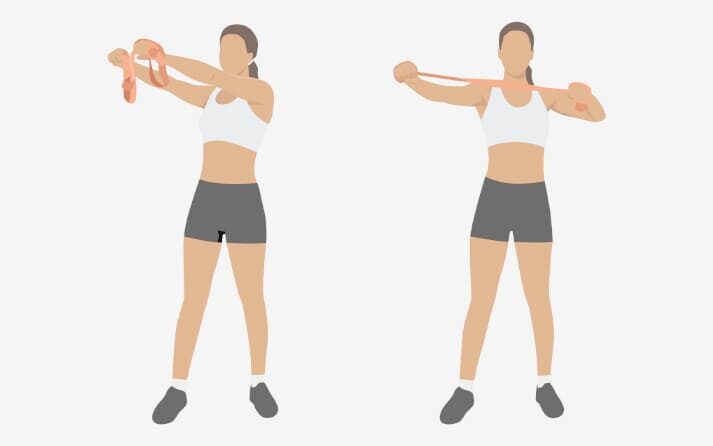
It’s easy to overlook resistance bands—until you feel how hard your chest fires through the rep. That rising tension? It forces peak activation exactly where it matters most. The benefits of resistance bands are legit when it comes to training smart, building real muscle, and staying injury-free.
Safer on Joints, Harder on Muscle
Free weights hit you fast, putting stress right at the start of a press. Bands ease into resistance and peak at the top, where your chest should take over. That keeps joints happy while your pecs still grind out every rep with max effort and safer mechanics.
Train Anytime, Anywhere
With bands, your gym fits in your backpack. You can knock out a full portable chest workout in a hotel room, your garage, or between rounds in the locker room. No need for racks, benches, or machines. Just a door anchor and that looped band is enough.
Ideal for Every Athlete
Whether you’re an MMA pro or just training at home, bands scale perfectly to your level. You control the setup, resistance, and speed. That’s why resistance bands for strength training work for beginners, fighters, and even lifters rehabbing from joint or tendon injuries.
Burnout and Recovery Friendly
Because bands apply steady, joint-safe tension, they’re perfect for burnout sets. You can blast through high reps without killing your form or worrying about safety. That helps you recover faster, train longer, and still build power when your body is beat up from sparring.
FAQ’s
Conclusion
A solid resistance band chest workout is not a shortcut rather it’s a proven, portable way to grow real strength. If you train with intent, push for overload, and stay consistent, your pecs will respond just like they would with heavy weights.
Whether it’s a quick chest workout at home or part of your fight camp training, bands deliver serious output. They protect your joints, travel light, and still bring the pain. Add structure, focus on form, and upgrade your gains without even needing a gym.
Smart athletes make tools work for them. That’s exactly what resistance bands for strength training do when you use them right.