




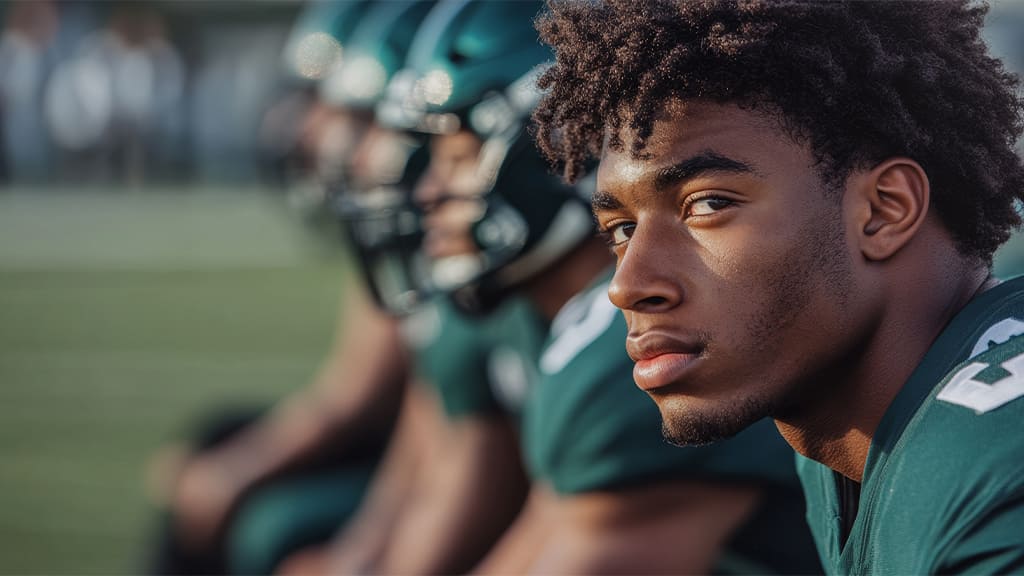
But you don’t always win in sports. So, what about the other side? Losing. It hurts, shakes your confidence and even give athletes serious self-doubt and depression. See what we’re talking about? Metal toughness for resilience! Resilience is what saves you from breaking when the scoreboard isn’t in your favor.
The psychology of winning and losing is a two-way road. Winning builds momentum. Losing builds character. Both equally shape the athlete. Both can fuel their growth to greatness.
Understanding the Psychology of Winning
Winning is proof. Proof that the hours of sweat, the pain, and the grind wasn’t a waste of time. That realization rewires the brain. You feel energized to repeat the hard work. Dopamine makes you feel awesome. You want to grind more for that dopamine effect. The psychological effects of winning create a surge of confidence and sharpen focus. You want to be at your best.
At the core of this is mental resilience in athletes. It’s the grit to keep fighting when the match drags on. The calm to perform under lights. The drive to push through fatigue. Without it, talent stalls. With it, victories multiply.
The psychology of winning in sports also leaves a mark that goes beyond a single game. Success builds momentum. Athletes who taste victory start to expect it, not fear it. That expectation fuels training, strengthens discipline, and shapes a long-term mindset. Athletes learn the importance and reward system of hard work and it goes beyond the field. It goes a long way in life, actually.
Winning doesn’t just crown the present, it builds the future. It creates a cycle where belief fuels performance, and performance fuels belief.
The Psychology of Losing in Sports

Everybody loses and it cuts deep. The best in their field lose and it always takes a toll on your self-esteem, your confidence and your self perception. Disappointment crushes you and frustration can drive you crazy. You hate being yourself at times. The psychological effects of losing are quite drastic.
The psychology of losing in sports is painful and it should be countered with mental toughness and resilience or it can take athletes to the dark alleys of depression and disappointment. Losing can actually be a turning point.
For those who develop mental resilience in athletes, failure becomes fuel. Through resilience, the story changes. With it, loss isn’t a sign of weakness; it’s data, it’s a learning opportunity, a chance to be better. That is the power of mindset in sports.
Every champion has scars from defeat. The difference is they didn’t let those scars define them. They turned pain into progress. That’s the hidden power of losing: it can either break you or build you stronger than before. Losing and winning build the sports psychology of performance. In their own ways, they decide how you perform under pressure.
Related Article: The Psychological Side of Injury Prevention in Sports
Building Mental Resilience: Strategies for Athletes

Now that you know how the psychology of winning and losing can affect your performance, how do you build up the walls to keep yourself safe from the harm? How do you build that resilience? Here’s a few tricks:
Visualization and Mental Preparation
Visualization is used for building mental resilience. In fact, it’s one of the best techniques. In it, athletes vividly imagine complex real situations and they practice precision, winning competitions, or staying calm under pressure.
If you do it repeatedly, it activates the same brain regions as actual physical performance. It leads to stronger neural pathways, improved muscle memory, and sharper execution when it matters most.
This means visualization boosts mental strength by improving focus and decision-making. It also reduces anxiety before competition, giving athletes a sense of control over high-pressure situations. Basically, it increases motivation in sports psychology.
Mindfulness and Positive Self-Talk
Another awesome technique for metal strength is mindfulness. It helps athletes manage pressure and teaches them not to dwell on mistakes. If you are also practicing positive self-talk alongside, it doubles the good effect. When you are constantly telling yourself positivity, it changes the inner dialogue. With positivity in the mental background, athletes can focus sharp and keep their emotions steady under stress.
Growth Mindset for Long-Term Success
A growth mindset in athletes flips challenges into fuel. Instead of getting stuck in regret, they learn and move forward. Losses turn into lessons. Wins become reminders that effort pays off. When athletes believe hard work can change the outcome next time, they don’t crumble under pressure. They rise.
That’s how resilience builds. And that’s why a growth mindset in athletes naturally creates stronger, more confident performers. It’s the bridge between setbacks and strength, the reason resilience in athletes becomes second nature.
Support Systems and Professional Help
A strong mind doesn’t develop alone. Athletes need people around them. Connection shapes resilience. Encouragement fuels confidence. Guidance sharpens focus.
Coaches push you when you slow down. Teammates remind you that you’re not alone. Family gives you balance outside the game. Together, they form the backbone of a strong mindset.
But sometimes support at home or on the field isn’t enough. That’s where a sports psychologist comes in. They help athletes deal with setbacks, calm their emotions, and keep performance steady when pressure is highest.
The message is simple: no one becomes mentally tough without help. Resilience is built in the community.
Linking Mental Toughness to Motivation
All of these things build mental toughness. And that behaviour builds resilience in athletes. The hope and determination that underpin resilience keep you motivated all the time. It fuels determination and keeps athletes moving forward despite obstacles. Grit and courage are the heart and soul of motivation in sports psychology. Motivation is only for the strong and resilient minds who know that no loss is eternal. There’s always a way out.
Related Article: The Mental Game: How to Develop Mental Toughness in Kickboxing
FAQ’s
Conclusion
If you’re an athlete, work on your mental toughness just as much as you work on physical strength. Your career isn’t just about strength and wins. It’s about how resilient you are. So build resilience with our strategies.