



When a fight hits the mat, the legs become the great equalizer. One wrong move, one twist, and the tide can flip instantly. A perfectly timed MMA leg lock can end a match in seconds, even against someone bigger, stronger, or more experienced.
From heel hooks to knee bars, these submissions sit in a strange spot in the fight world. They’re feared, respected, and sometimes even misunderstood. For years, they were the dark arts of grappling – too risky, too brutal, too unpredictable. But not anymore.
Today, leg lock techniques in MMA have become a language every fighter must speak. In this guide, we’ll unpack the science, the history, the rules, and the legends behind them.
What are Leg Locks in MMA?
At their core, MMA leg locks are submission techniques that target the joints and ligaments of the lower body – the ankle, the knee, even the hip. The goal is simple: create enough pressure to force a tap before something tears.
They work through hyperextension, rotation, or compression – all fancy ways of saying “your leg’s not supposed to bend that way.” And that’s exactly what makes them so effective.
Here’s the thing: leg locks can level the playing field. They don’t care about your size or reach. A smaller fighter can flip a bigger opponent in seconds if they find the right angle. They’re also momentum changers. In a scramble, when control is lost, a quick leg entanglement can turn chaos into control.
Different leg locks attack different targets.
- The ankle for control or pain compliance.
- The knee for deep ligament submissions like the knee bar.
- The heel for devastating rotational attacks like the heel hook.
In short, leg lock techniques in MMA are brutal, technical, and incredibly precise.
Related Article: What Is MMA? What Are Its Disciplines?
A Brief History of Leg Locks in MMA
Leg locks didn’t just appear out of nowhere. They evolved from old-school grappling arts like catch wrestling, sambo, and Brazilian jiu-jitsu. Each discipline had its own spin on how to twist or trap the leg, long before MMA was even a thing.
But in early MMA, leg locks had a bad rep. Fighters saw them as “cheap shots” or dangerous gimmicks. Even in BJJ circles, they were the taboo techniques – the kind that could end training careers if misused. Some gyms banned them altogether.
Then came the innovators.
Masakazu Imanari rolled onto the scene (literally) with his wild, unpredictable entries. Rousimar Palhares made everyone fear the heel hook again. Ryan Hall showed how technique could beat raw power.
These fighters flipped the script. They proved that MMA leg locks weren’t just traps for the reckless; in fact, they were tools for the intelligent. And as no-gi jiu-jitsu and submission grappling exploded, so did the leg lock revolution.
Common Leg Lock Techniques Explained

Let’s break down the big four – the leg locks every fighter, fan, and coach should know.
Heel Hook
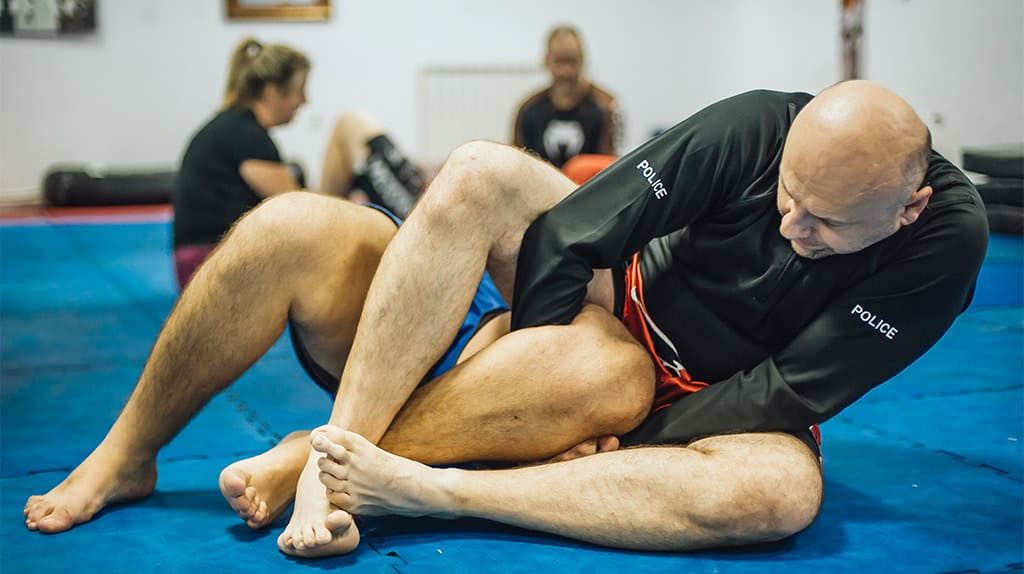
The king of pain. The heel hook in MMA attacks the ankle and knee ligaments with a twisting motion that sends torque through the entire leg. When applied, it feels like your knee’s being unscrewed from the inside.
Famous users? Ryan Hall, with his slick Imanari rolls, and Rousimar Palhares, whose heel hooks ended fights before opponents even realized what happened.
Straight Ankle Lock
The straight ankle lock MMA fans know and love is the “classic” of leg submissions. It’s cleaner, safer, and more controlled than a heel hook. The attacker uses their forearm to hyperextend the opponent’s ankle joint while locking their leg in place.
You’ll see it a lot in early MMA and BJJ competitions. It’s one of the first leg locks beginners learn because it teaches control before chaos.
Knee Bar
Think armbar but for the leg. The knee bar submission targets the knee joint, forcing it to straighten past its natural limit. It’s a pure hyperextension move that can destroy ligaments if held too long.
The setup often comes from top control, half guard, or wild scrambles.
Toe Hold
The toe hold is a rotational submission that twists the foot and ankle against each other. Fighters often chain it with heel hooks or straight ankle locks, creating nasty submission traps.
Together, these four represent the core of MMA leg lock knowledge, each with its own risks, setups, and rewards.
Rules & Leg Lock Legality in MMA
So, are leg locks legal in MMA? Mostly, yes but with rules.
In professional MMA, almost all MMA submissions are fair game. Heel hooks, knee bars, toe holds, and ankle locks – all are legal under most major organizations like the UFC, ONE Championship, and Bellator. Fighters just need to apply them responsibly.
Amateur MMA, though, plays it safer. Many amateur promotions ban heel hooks altogether because they’re too easy to misuse and too dangerous when mishandled.
Referees are the silent guardians here. They watch for unnatural joint rotation and step in fast if something looks wrong. And fighters? They’ve got one rule – tap early, live to fight another day.
Leg locks can end a fight beautifully or end a career brutally. The difference lies in control.
How Leg Locks Work? The Science of Leverage
Every MMA leg lock is built on the same foundation: leverage. The attacker uses their entire body to isolate and twist the opponent’s joint. It’s not about brute strength. It’s about angles, positioning, and timing.
By controlling the hips and ankles, the attacker traps the limb in a way that even small pressure turns into massive torque. Think of it like a wrench on a bolt; a tiny twist can do big damage.
The scary part? Ligaments don’t stretch much. So when they tear, they tear instantly. Sometimes the pain comes after the damage. That’s why you’ll hear fighters yell “tap early” over and over in training.
The best leg lock techniques in MMA rely on precision, not aggression.
Famous MMA Fighters Known for Leg Locks
A few fighters made their names twisting legs into submission.
- Masakazu Imanari – nicknamed “The Leg Lock Master.” He didn’t just use leg locks; he reinvented how to get to them. The Imanari Roll, his signature move, has been copied worldwide.
- Rousimar Palhares – feared for his speed and strength. His heel hooks in MMA were lightning fast, sometimes too fast, leading to controversy when he held on after the tap.
- Ryan Hall – the modern technician. He showed that leg locks could be part of a high-IQ gameplan, not just desperation moves.
- Minoru Suzuki – a catch wrestling legend whose old-school style laid the foundation for many modern techniques.
- Charles Oliveira – better known for his chokes, but don’t be fooled. His smooth transitions into ankle locks and knee bars show how versatile he really is.
These names turned MMA submissions into art. They proved that the lower body, often overlooked, could be a fight-ending weapon.
Leg Lock Defense: How Fighters Survive the Danger?
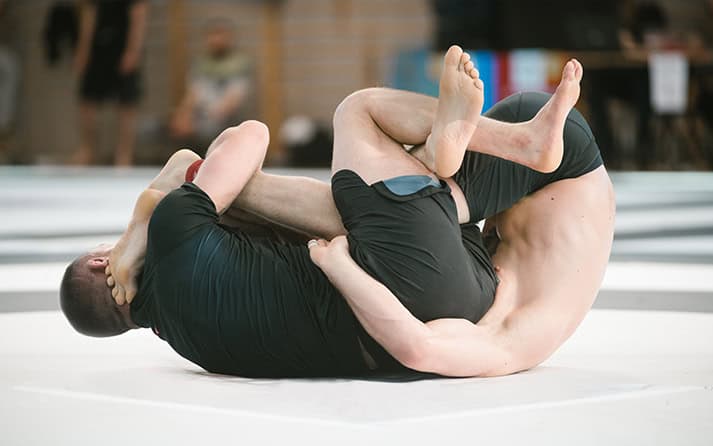
The best leg lock defense in MMA starts with prevention. Don’t expose your legs in scrambles. Control posture. Hide your feet and keep your base wide.
Then there’s hand fighting – the first line of defence. Break grips early, don’t let your opponent control your heel or ankle. If they can’t lock it in, they can’t finish.
When trapped, fighters often turn the knee out to relieve pressure and create space. Timing that turn can mean the difference between a pop and an escape.
And if all else fails? Counterattack. Many skilled grapplers use failed leg locks to flip positions, taking top control or even the back.
Training tip – drill slow, drill smart. Going full force in leg lock sparring is how careers end. Respect the tap.
Common Mistakes Beginners Make
New fighters love the idea of leg locks, right up until they lose position or hear something pop.
Overcommitting too early is a classic. Jumping for a MMA leg lock without controlling position almost always ends with your opponent on top.
Then there’s neglecting defence. Beginners focus on attacking legs but ignore how to protect their own. Bad idea.
Another big one? Ignoring transitions. A leg lock without a sweep or follow-up plan is a gamble. Even if you miss, you should land somewhere useful.
And finally too much force. Beginners crank before they’ve secured grips, turning technique into chaos. That’s how injuries happen.
Leg locks reward control, not aggression.
FAQ’s
Once a fringe tactic, MMA leg locks have become part of the sport’s DNA. They’re technical, strategic, and yes, dangerous when misused. But that danger is part of their beauty.
Train smart. Respect the tap. And never underestimate the power of the legs.