




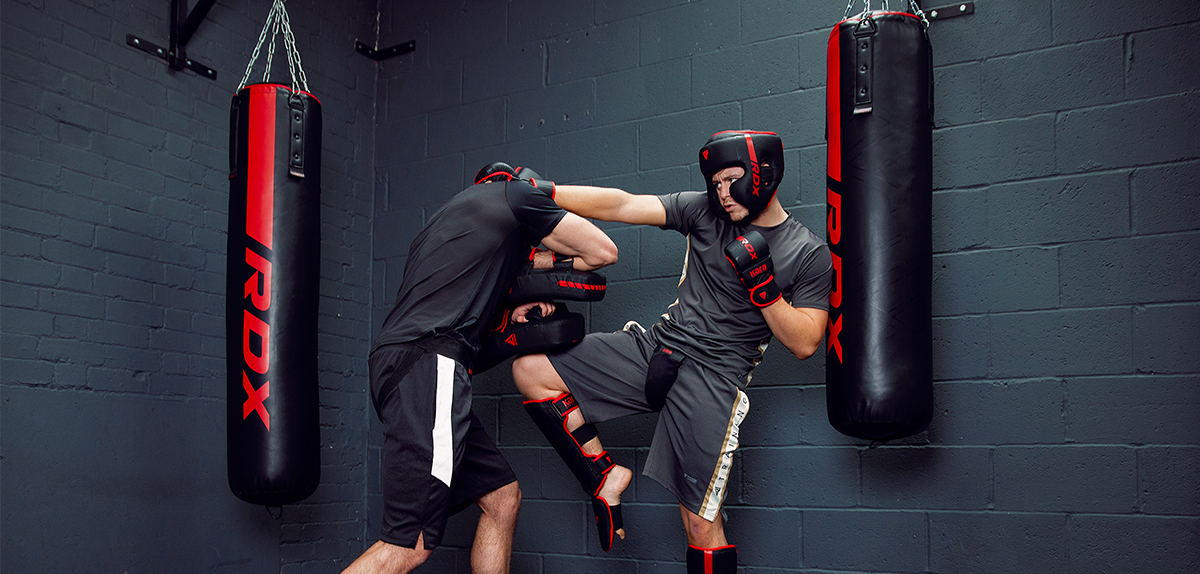
A strong stance or precise punches aren’t just skills; they are the secret weapon to triumph. For a newbie, mastering these skills is essential before entering the ring so that you are well-equipped to hold an edge over the opponent.
In this blog, we will discuss all the fundamentals of boxing and how you can have a solid grip on each one of them!
Related Article: Step Up Your Boxing Game: Essential Workouts and Tips for Beginners
Basic Punches for Beginners
Every boxer begins with the basics, and punches you throw can literally make or break your game. Let’s have a closer look at four basic punches for beginners to get skilled at.
Jab: This is your range-finder and your trusty sidekick in the game. It is sharp, keeps your opponent at a safe distance, and allows you to explore openings for stronger punches. A straight jab has the power to disrupt your opponent’s rhythm and lets you experiment with combinations.
Cross: A knockout artist, it pairs up beautifully with a jab to create a combo that is hard to beat. Delivered with the dominant hand, it is all about showcasing power. And remember, power isn’t just about arm strength; it is actually leveraged from the rotating of your hips.
Hook: If you are close and personal with your opponent, the hook will be your go-to move. Designed to break through the opponent’s guards, it targets the jaw or ribs. To land the right hook, keep your elbows high and balanced, and let your body take charge.
Uppercut: This is the ideal approach for close-range fights. This kind of solid punch can sneak through the defences and deliver serious damage to the chin or body. With tight and controlled movements, this move can be your endgame.
Boxing Stance and Guard Tips

Stance and guard are the backbone of any great fighter. They are more than just the look; they give you balance, mobility and protection in the ring.
Your stance sets the stage for every dodge, punch, and counterattack. To take the right stance, stand with your feet shoulder-width apart, bend your knees slightly and distribute your weight evenly.
For right-handed fighters, orthodox would be your preferred stance; however, left-handers would be more comfortable in a southpaw position. For this, your lead foot should point forward and back foot at an angle that supports stability and leverages swift movements.
The guard, on the other hand, is your shield. To take guard, you keep your hands up at eye level so that your face is protected and you are ready to strike. Keep your elbows tucked in, shielding your ribs without exposing your midsection.
Here are some boxing stance and guard tips to keep in mind before starting.
Tips for Beginners
- Keep your foot lightly planted without being too firm. This will help with mobility.
- Don’t let tension slow you down. Stay relaxed so that your shoulders are loose.
- Keep your balance your priority. Always return to your stance after every movement to avoid being caught off-guard.
Footwork Drills for Boxing
Footwork is another supremely significant fundamental of boxing which keeps you in control. It helps you dodge punches effectively, close in on your opponent and create a flawless angle for an attack. Without proper footwork, the most potent or most brutal punches can miss their mark.
Basic Footwork Movements:
- Step-and-Slide: This is a very simple movement which keeps you light on your feet. To do this, you take charge with your lead foot and slide the back foot to follow. It is ideal for quick adjustments without losing your balance.
- Pivoting: To pivot, you rotate the ball of your foot to change the angles rapidly. It helps you escape jeopardy and opens up doors for counterattacks.
- Shuffling: This is a subtle yet powerful movement which keeps you at a perfect distance from your opponent.
Footwork Drills:
- Shadowboxing: To hone your boxing skills, shadowboxing must not be skipped. To practice, stand in an open space or in front of a mirror and visualise an opponent against you, then move around in and out of range as if you are in the ring. Throw punches while focusing on your footwork.
- Ladder Drills: Agility ladder is a portable, flat tool with square-shaped pieces, shaped like a ladder. Lay it on the ground and practice around through the spaces as quickly and accurately as possible. You can practice in and outs or step laterally into each square, or step into each square in basic forward steps.
- Cone Drills: Set up cones in a zigzag pattern to simulate movements around an opponent. Practice weaving between the cones with quick steps. You can also combine footwork with shadowboxing to enhance agility.
Additional Tips: Keep your weight evenly distributed and remain light on your toes. Regular drills will make your movements fluid, your attacks sharper, and your defence stronger.
Building Speed and Accuracy
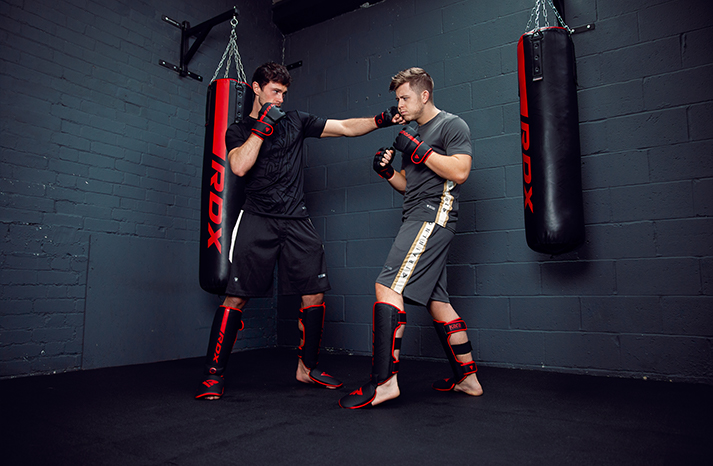
Building speed and accuracy matter a lot in boxing. The game doesn’t depend only on the number of punches you throw but also on how effectively you land them. A fast punch can surely catch the competitor off guard, but it is the accuracy of the punch that will leave a lasting impact.
Speed Training
- Shadowboxing: This is done without a bag. Focus on throwing quick combinations like jabs, crosses and hooks while maintaining proper form. This will improve your reaction time and hand speed.
- Speed Bag: Speed bags will be your formidable partner for developing rhythm and timing. Keep your punches light but fast—that is the recipe for maintaining a consistent rhythm.
- Punching Bag: The punch bags mimic the opponent’s unpredictability by bouncing fast, which helps improve reflexes and hand-eye coordination.
Accuracy Training:
- Target Practice: When practising with a punching bag, focus on hitting at areas that you believe would be the chin or the ribs. This will sharpen your ability to hit precise spots.
- Mitts Work: Practice with a trainer with focus pads. This will improve your ability to hit accurately and your timing and combinations.
- Visualisation: Before you throw a punch, visualise the spot that you want to hit. This mental preparation will translate into enhanced precision.
Learning Defensive Moves
A strong defence is just as important as a powerful punch. It keeps you in the fight longer, helps you avoid injuries, and sets up a counterattack that turns the tables in your favour. Here are some key defensive moves that you should master:
- Slipping: This is a slight movement of the head to either side, which can make your opponent’s hit a miss by inches. It is subtle but very effective, keeping you in the position to strike back harder.
- Ducking: To duck, you lower your body by bending your knees to avoid any incoming punch. This helps against straight punches and allows you to counterattack.
- Blocking: Blocking allows you to shield yourself by using your hands and arms. You can block the jabs with your training gloves and absorb the hooks by raising your elbows to guard your ribs.
- Parrying: Parrying allows you to redirect the opponent’s punches with quick and controlled hand movements. A simple push is enough to throw them off balance, giving you an opening to strike back.
Related Article: Boxing Defence Techniques: Mastering the Art of Staying Unharmed
Defensive Drills
- Practice the drills with a partner with controlled punches to uplift your defence skills.
- Defensive shadow boxing helps you work on your head movements and blocking techniques while staying light on the foot.
- Mitt drills are also very effective in timing your defensive reactions and transitions into counters.
Additional Tips: Integrate defence into your offence by slipping and ducking during combinations. With consistent practice, the defence will become second nature to you.
Conclusion
Mastering the fundamentals is your key to becoming a confident and skilled fighter. By perfecting your punches, footwork, stance and speed, you can build a strong foundation to hold an unbreakable edge over your opponent and gain success. All you need to do is stay consistent, practice diligently and brace yourself for the journey of excellence.
Read More
- Mastering Sparring Techniques for Boxing, MMA, Kickboxing and Muay Thai
- The Ultimate Guide to Freestanding Punching Bags for Home Boxing: Top Picks and Benefits
- Mastering Boxing Techniques: Your Ultimate Guide to Becoming a Better Boxer
- Basics of Boxing: What’s the Difference Between Amateur & Professional?