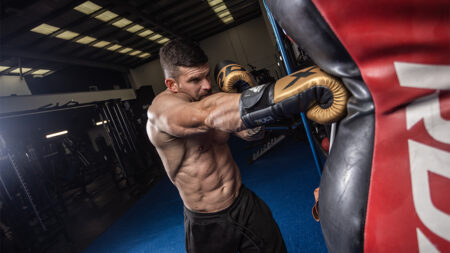





Looking to end that fight quick? The left hook is the way to go! It’s one of those punches that can turn the tide instantly. It is fast, sharp, and devastating. But you know what’s the deadliest part of this hook? There’s so many ways of throwing it at your opponent.
You can use it to knock someone out but you can also sneak it into a combo to give an unwanted surprise. Or simply dig it into the body until your opponent breaks down.
In this guide, we’ll break down exactly how to throw it right. You’ll also see how to mix the power left hook into combinations that keep your opponent guessing.
What is a Left Hook?
Well, the left hook technique is simple. It is not a straight one. It comes from the side and catches the opponent unattended usually. That curve is what makes it so sneaky. The circular path (because it’s coming from the side) makes it harder to guess.
The left hook to the body is especially nasty. It targets the ribs or liver, and anyone who’s ever been caught with a liver shot knows that it shuts you down fast. Head hooks, on the other hand, are all about impact and knockouts. Land one on the chin or temple, and the fight can be over in a blink.
But here’s the beauty of the power left hook: it’s not just about offence. It doubles as a counterpunch. Slip a jab, step in, and whip a left hook across—suddenly, your opponent’s on the defensive. That’s why fighters love it. It’s versatile, it’s dangerous, and it works whether you’re on the front foot or fighting off the back.
Related Article: Lead Hook Defense: How to Block, Slip, or Roll Safely in Boxing
Step-by-Step Guide: How to Throw a Left Hook?

Throwing a good hook is all about mechanics. It’s not just swinging your arm. If you are just swinging your arm from the side without proper stance and technique, you’ll just lose power very fast. So here’s how to do it right:
- Start with your feet shoulder-width apart. Knees slightly bent. Hands up in guard. Nothing fancy. Just a strong, balanced stance.
- Pivot the Foot and Hips. This is where the magic happens. Rotate your lead (front) foot slightly, letting the heel come up. At the same time, twist your hips into the punch. That torque is what gives the pivoting left hook its power.
- Your elbow should bend around 90 degrees. Keep your hand close to the chin at the start. Don’t flare your arm out. Keep it compact.
- Swing the arm horizontally, but don’t forget your body is driving the motion. Your shoulder should roll into it, your core should be tight. This is the difference between a slap and a power left hook.
- The second your fist connects (or misses), snap it back to guard. That’s how you stay safe and ready for whatever comes next.
Take your time with this sequence. Shadowbox it slow in the beginning. Once you have mastered it slow, add speed. With practice, it should start feeling all natural.
Variations of the Left Hook
The left hook has many variations. It isn’t boring stuff. Different situations call for different versions, and you are super dangerous if you know them all. Let’s learn them then, shall we?
Digging Left Hook
This one’s tight and compact. You throw it up close, often to break through an opponent’s guard. Think of it as chipping away at their defence. Short, sharp, and very effective.
Lunging Left Hook
Say your opponent’s backing up, keeping distance. You close that gap with a step forward and whip a hook as you move. It’s high-risk, high-reward. Don’t miss it because the momentum will throw you off balance. There is so much power in that speed. But if you land it, it’s a knockout! That’s the power of a lunging left hook.
Left Hook to the Body
Few things demoralise a fighter like a well-placed liver shot. The left hook to the body digs under the ribs, cutting through stamina. It doesn’t always end the fight instantly, but it makes everything harder for your opponent – everything like breathing, moving, and defending.
Pivoting Left Hook
This is the classic. You rotate your foot, hips, and shoulders into the punch. The torque creates maximum impact. A well-timed pivoting left hook can drop even the toughest fighter because it uses your entire body as a weapon.
Related Article: How to throw a Boxing Hook and Uppercut?
Left Hook Footwork Tips
A good punch without good footwork? It’s wasted. The left hook footwork makes or breaks the punch.
- First off, balance. If your feet are planted wrong, your hook will either lack power or leave you open to a counter. Keep your weight centred, knees soft, and always be ready to move.
- Now, pivoting. Your lead foot rotates inward as you throw, while your back foot helps stabilise and add torque. That’s what gives the pivoting left hook its snap. Without the pivot, it’s more like a push than a punch.
- Distance management matters too. Sometimes you need to step in to land a clean shot. Other times, a small lean back creates the space to whip a hook without overcommitting.
- And don’t forget defence. Your non-punching hand should stay high. Too many fighters drop their guard mid-hook, leaving themselves wide open. You want offence and defence working together.
Left Hook Combos
The hook rarely works alone. It shines in combinations. Here are a few staples:
- Jab → Left Hook: Simple, effective. The jab blinds or distracts. The hook lands clean.
- Left Hook → Right Cross: The classic one-two. The hook sets up the straight right. Works like a charm.
- Uppercut → Left Hook: Start low, come up with the uppercut, then whip across with the hook. The change of angle keeps opponents guessing.
- Body and Head Combos: Throw a left hook to the body, then a hook upstairs. Mix it up. Make your opponent guard both levels.
These combos are awesome but it is your timing and accuracy that make them deadly. Put in some hard work before you start expecting deadly results.
Practice landing them on target. Shadowbox, hit the bag, and work with mitts. They should become your natural movements and that is when they’ll start showing their magic. A crisp left hook combo is often the difference between winning and walking away frustrated.
Common Mistakes to Avoid

The hook is dangerous, but only if done right. A sloppy one will get you countered fast. Here are the usual suspects:
- Dropping the right hand: Leave your chin exposed, and you’ll eat a cross.
- Overextending the arm: A hook is compact. If you’re reaching, you’re off balance and weak.
- Forgetting hip rotation: Without the body, the punch is just an arm swing. No torque, no impact.
- Telegraphing: If you wind up your hook, opponents will see it coming. A pivoting left hook should be fast and tight.
Quick fixes? Slow it down. Shadowbox in front of a mirror. Focus on the basics like stance, pivot, guard. Build speed only after the form feels automatic. That’s how you turn mistakes into strengths.
FAQ’s
The left hook technique is a real weapon when you actually know it. Learn the stance, the pivot, the timing, and you’ve got something that can change a fight instantly. The best part is the variations like the body shot, the pivot, the lunge, use them and become invincible.
But it takes practice like everything great. Drill the left hook footwork, keep your guard up, and throw it in combos until it feels natural. There are no shortcuts because it’s hardly about madly flailing your arms. So practice and master and conquer.