



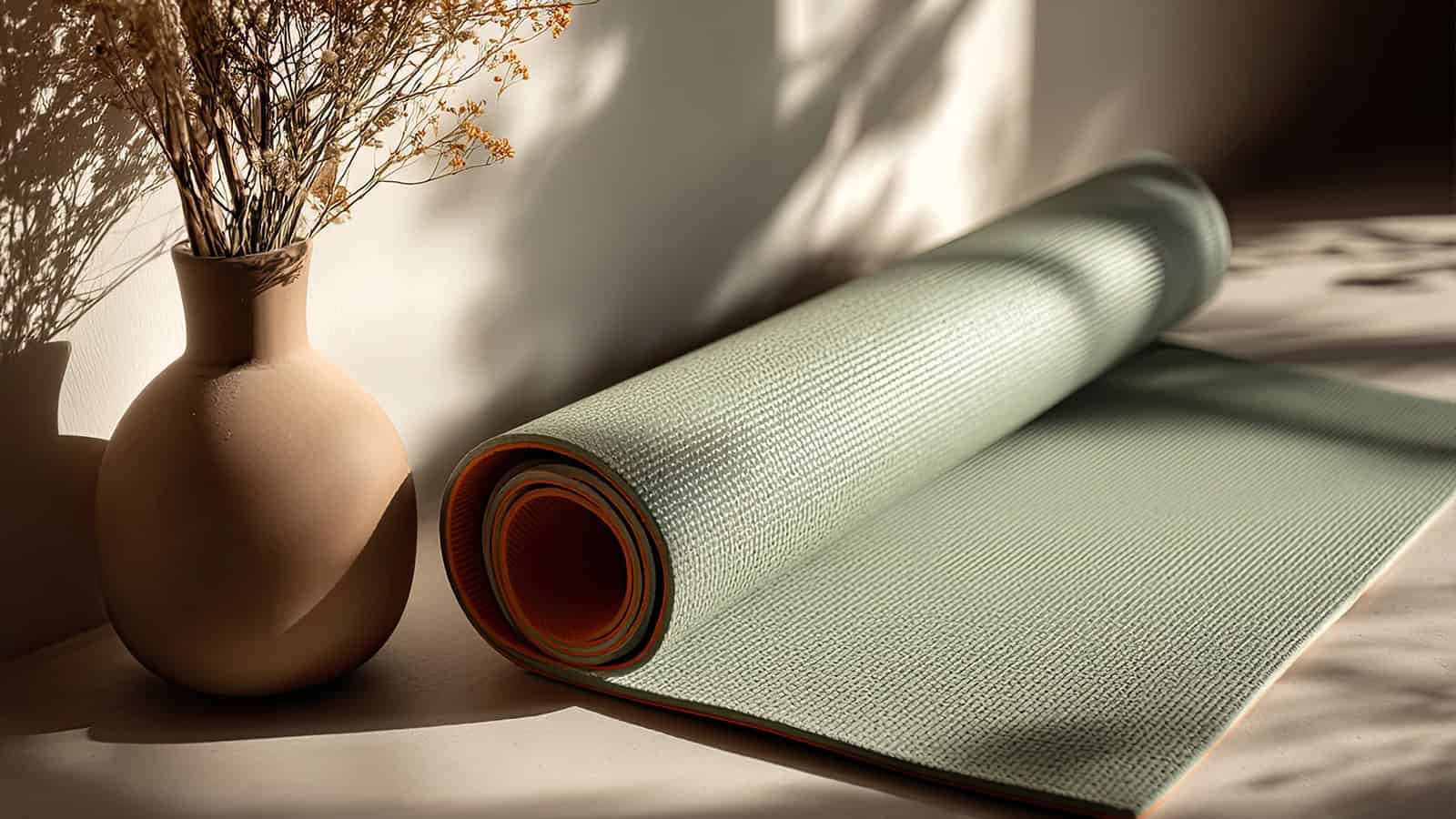
Sometimes, we fail to give due importance to our fitness pals like our yoga mats. They are almost as important as our resilience and determination to do our best. They can make or break us, literally. They provide comfort, prevent slippage and support our workouts. In short, they are indispensable.
But are they all alike? Nope! There are good ones and there are useless ones. And everyone wants to buy the best one, right? So let’s read this blog so we can all get the best eco-friendly yoga mats without fail. So, how do you even pick one without spiraling into decision fatigue?
Don’t worry. We’ll figure it out together.
This is your down-to-earth guide on how to choose a yoga mat – what thickness actually means, what materials feel like, and which one will hold up when life (and sweat) hits hard.
Why Your Yoga Mat Matters?
You may think it is just a piece of luxury, but it offers real benefits and value, yes, your yoga mat! It helps with balance, breath, and even focus. It cushions your joints and also saves you from slipping when you are trying to stretch during some complicated and difficult poses.
These things are achieved when you choose the right one, though!
But the wrong one? Oh, you’ll know. Your joints will start sending you angry messages halfway through class. Because obviously thin mats on floors hurt. You can also forget holding Downward Dog because you are going to be busy balancing all the time. You’ll be sliding like you’re in a dance-off.
A lot of people underestimate how much this one choice shapes your practice. When you find a mat that feels right, your poses feel easier. Your mind quiets down. You stop thinking about discomfort and start focusing on movement.
So, if you’re wondering how to choose a yoga mat, start here: how does it make your body feel? Supported or strained? Steady or distracted? A good mat is one that disappears under you – it just works. Especially if you need a yoga mat for joint support that doesn’t scream every time your knees touch down.
Yoga Mat Thickness Guide: Finding the Right Cushioning
Thickness? That’s boring. You feel the difference when you experience it.
A few millimetres can completely change how your wrists and knees experience the floor. Here’s your quick yoga mat thickness guide, no fluff.
1/16” (1.5 mm) – Ultra Thin / Travel Mats
These are the ones that fold up and slide into a backpack. Perfect if you travel, or if you just like the idea of being able to roll up your entire practice. But let’s be honest — they’re not comfy. Cushioning is minimal. Ideal for strong, stable yogis who don’t need padding.
1/8” (3 mm) – Standard Mats
This is the sweet spot for most people. Not too squishy, not too flat. You can still feel the floor for balance poses, but there’s enough give for comfort. If you’re unsure where to start, start here.
1/4” (6 mm) – Thick Mats
Ah, these 6mm yoga mats are knee-savers. Perfect for beginners or anyone whose joints complain during longer holds. Great for restorative or Yin yoga. The downside? A bit less stability when you’re balancing.
Quick tip: Try kneeling and then balancing. If it feels steady and comfortable, you’ve got it.
For sensitive joints, go thicker. For balance-heavy classes, go thinner. There’s no universal rule – your body tells you what’s right. That’s what makes the yoga mat thickness guide so useful: it’s about listening to yourself more than specs.
Material Matters: TPE vs PVC vs Cork vs Natural Rubber
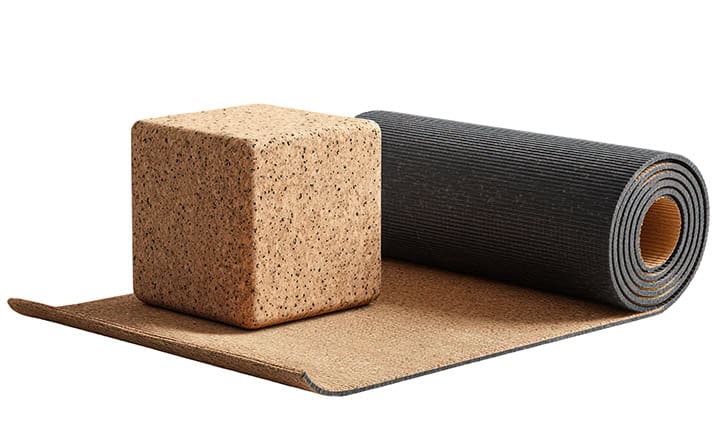

Now let’s talk texture and feel – because material changes everything. Here’s the simple yoga mat material comparison you actually need.
TPE (Thermoplastic Elastomer)
Soft. Light. Slightly springy. A TPE mat is a solid all-rounder for anyone who wants comfort and easy cleaning. It’s eco-friendlier than PVC and works great for beginners.
PVC (Polyvinyl Chloride)
This one’s an old classic. Tough, long-lasting, and sticky in the best way. Great grip, especially for sweaty or intense sessions. But it’s not eco-friendly. If you’re going for performance, it wins. If you’re going for sustainability, not so much.
Cork Yoga Mats
If mats had personalities, the cork mat would be the chill one who also runs marathons. It’s grippy, antimicrobial, and actually gets better with sweat. Perfect for hot yoga. Plus, it looks and feels earthy – like nature invited itself into your studio.
Natural Rubber Mats
Heavier, yes. But the grip? Amazing. Dense cushioning. Great traction. That comes with PU mats. Fantastic if you’re serious about your practice.
Pro tip: Avoid those cheap foam mats that smell weird and start peeling after a few weeks. They’re fine for one class, not for consistent practice.
So, TPE vs PVC yoga mat – who wins? Depends on you. Eco-friendly comfort or unmatched grip and lifespan? Personally, I’d say if you’re new or casual, go TPE. If you’re training hard daily, PVC still holds its ground.
Grip & Texture: Preventing Slips and Enhancing Stability
Grip is what keeps you confident. Without it, yoga workout turns into an accidental slip ’n slide.
A non-slip yoga mat for beginners can completely change your experience. Grip keeps you focused on your breath, not your footing.
Here’s what matters:
Smooth Mats
They feel sleek. They’re great for slow, mindful flows where you move with control. But when sweat joins the party? They lose traction fast.
Textured Mats
Small ridges or grainy surfaces help you anchor your hands and feet. Perfect for faster styles like Vinyasa or Power Yoga.
If you sweat a lot (and most of us do), cork and natural rubber are lifesavers. They actually get grippier with moisture, the opposite of most mats.
Want to test it? Try Downward Dog. If your hands start sliding after a few breaths, that’s your sign to move on. Grip is trust. You want to feel grounded enough to close your eyes mid-pose and not worry about face-planting. A non-slip yoga mat for beginners gives you that kind of trust.

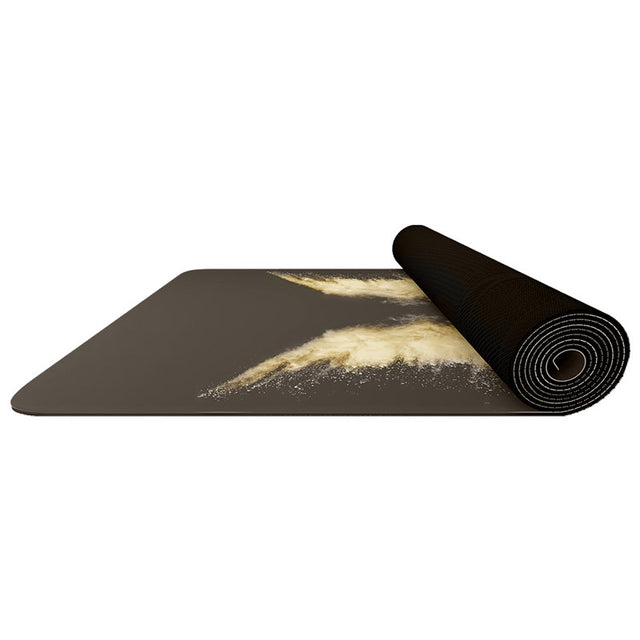
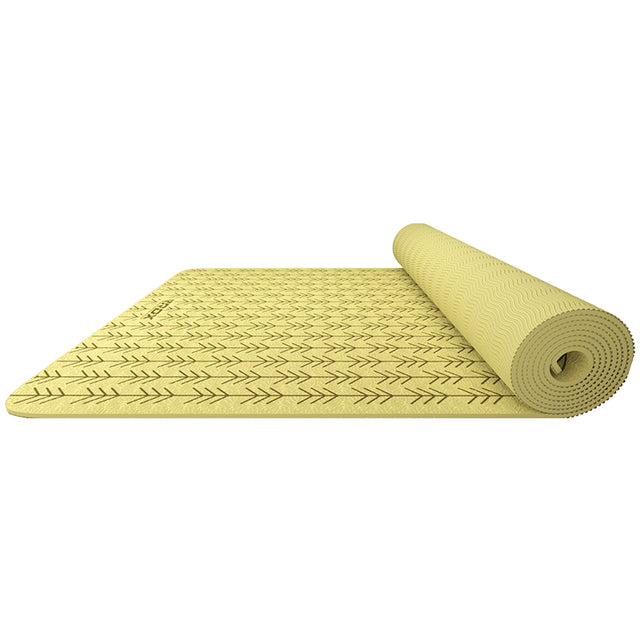
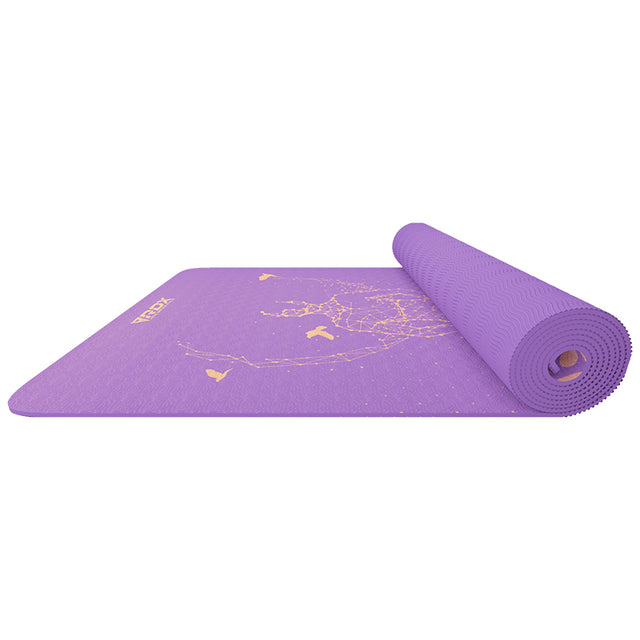
Yoga Mats by Practice Type
Not every mat suits every practice. Here’s the quick version:
Hot Yoga
You need a serious grip. Go for cork or natural rubber. Pair with a towel if you sweat buckets.
Vinyasa or Power Yoga
Durability and firmness matter. TPE or natural rubber holds up best when you’re moving fast and hard.
Restorative or Yin Yoga
You’re here to melt into the mat. Choose something thick (6mm+) and soft. Comfort over stability.
Travel Yoga
If you’re constantly on the move, get a travel yoga mat lightweight enough to fold. Usually 1.5–3mm TPE works great.
How to Test a Yoga Mat Before Buying?
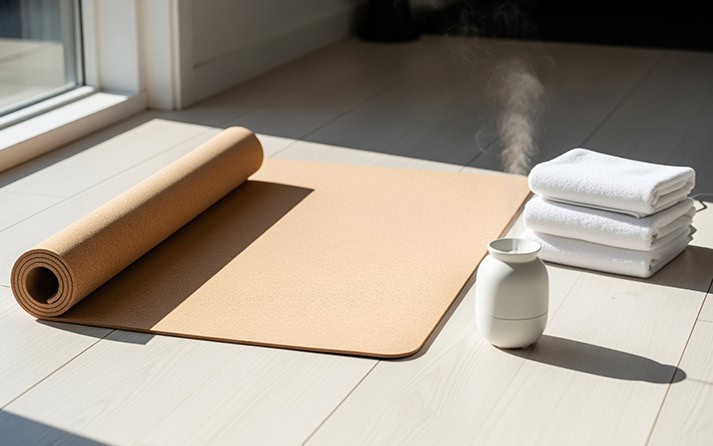
You wouldn’t buy a bed without lying on it first, right? The same goes for yoga mats.
Here’s your quick test routine:
Grip Test
Downward Dog. If your hands slide, it’s a no.
Cushioning Test
Kneel. Shift your weight. It should feel supported but not spongy.
Stability Test
Tree Pose. If your foot wobbles too much, the mat’s too soft.
Also, smell it. If it reeks of chemicals, skip it. Check weight too; a heavy mat sounds solid but carrying it around might kill your motivation. When it comes to how to choose a yoga mat, trust your senses. Grip, texture, smell, your body knows before your brain does.
Recommended Yoga Mats for Beginners
Let’s make this easy.
For Comfort
6mm TPE or natural rubber mats. Great for long sessions or sensitive knees.
For Grip
Cork or non-slip PVC. Especially good for sweaty palms.
For Portability
Go for a travel yoga mat lightweight enough to fold and toss in your bag.
For Eco-Friendly Options
Cork or jute. Sustainable, natural, and beautiful.
Here’s a quick reference table to help:
Type | Best For | Material | Thickness | Key Feature |
| TPE | Beginners | Eco-friendly | 4–6mm | Soft + light |
| PVC | Hot Yoga | Durable | 3–4mm | Strong grip |
| Cork | Sweaty Sessions | Sustainable | 4–5mm | Gets grippier when wet |
| Natural Rubber | All Levels | Eco | 3–6mm | Dense cushioning |
| Jute | Eco Lovers | Natural Fiber | 5mm | Rustic texture |
| Travel Mat | On the Go | TPE | 1.5–3mm | Compact & foldable |
Finding the right yoga mat for joint support or grip isn’t about brand or price, it’s about feel.
Related Article: Enhancing Your Yoga Experience with Perspiration-Boosting Accessories
FAQ’s
Simple care = better yoga mat durability.
In the end, we’ll just say you need a very comfortable and supportive mat. It should help you connect with your routine. It should help you show up even when you don’t quite feel like it.
There are many standards to judge the mats by, the best standard is always your comfort. It should cushion your joints, prevent slippage, and support the flow of your movements. So, no need to hurry into buying one, take your time and find YOUR best one.
That’s exactly how to choose a yoga mat. Focus on your comfort and listen to your body!