



Short rests burn you out fast but keep the heart rate up. Longer breaks? They let your muscles recover so you can lift heavier again. So if you’ve ever wondered why you’re not seeing results, it might not be your workout, it could be your rest.
Rest isn’t just downtime. It’s a powerful tool. It decides how well you recover, how much you lift next round, and whether your body builds muscle or just burns calories. In this post, we’ll break it all down. You’ll learn exactly how long to rest between sets based on what you’re training for, be it building muscle, gaining strength, or pushing your endurance. Because when your rest matches your goals, the results speak for themselves.
Let’s get into it.
Why Rest Between Sets Matters?
 Rest isn’t just a break. It’s part of the workout. What happens between sets is just as important as the reps themselves. Your body uses that time to reload energy, reset your nervous system, and recover mentally. Without it, performance drops fast. You feel weaker, your form breaks down, and your progress stalls.
During rest, your body refuels ATP, that’s the stuff your muscles burn to lift weight. It boosts muscle recovery between sets. No recovery? No growth. You’re just grinding down your body. Your brain needs that rest too.
The right rest time between weightlifting sets can change everything. Want to build muscle? You need a different rest time than if you’re trying to get lean or boost endurance. It’s not guesswork, it’s strategy. And if you’re not syncing your training goals and rest intervals, you’re leaving results on the table. Rest smart, not random. That’s how you train with purpose.
Related article: The Truths and Myths of Sports Recovery: Every Athlete Should Know
Rest Between Sets for Different Goals
Your fitness goal decides everything, not just how you train, but how you rest. The time you take between sets can either help you grow, lean out, or build stamina. It’s not just about catching your breath. It’s about telling your body what to adapt to. Let’s break down the ideal situation for training goals and rest intervals:
Rest Between Sets for Muscle Growth (Hypertrophy)
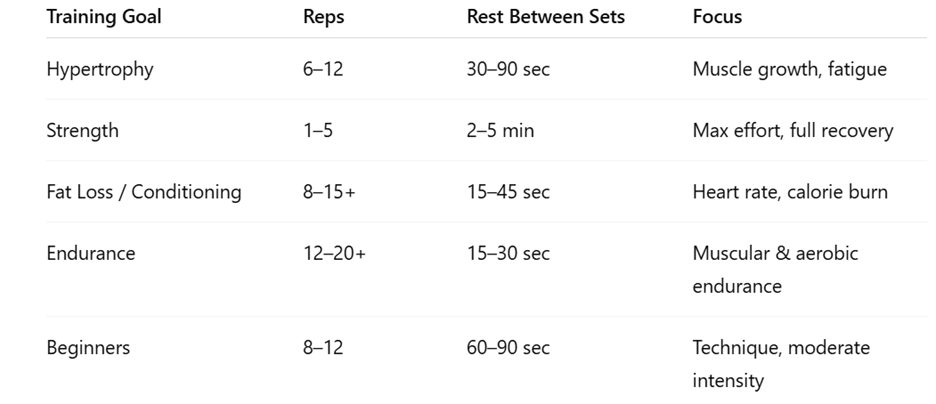
The hypertrophy rest time is between 30 to 90 seconds of rest. During this short rest, your muscles build up metabolic stress which is essential to increase the size. The primary purpose of the rest is to ensure your muscles are working till exhaustion without compromising on form.
The ideal rep ranges for hypertrophy are 6 to 12 reps per set. Aim for about 3 to 5 sets per exercise. You’re not going for max effort like a powerlifter, but you still need decent weight. The goal is to keep tension high and rest just enough to come back strong. That’s the balance.
Too little rest, and you can’t lift enough to trigger growth. Too much, and you lose that muscle-pumping stress. So if you’re asking about the best rest between sets for muscle growth, it’s all about walking that fine line between burn and performance.
Rest Between Sets for Strength
Strength training is a different beast. Your body needs time, real time to recover between sets. And so the optimal rest between sets should be 2 to 5 minutes. That might sound long, but it’s necessary. Your nervous system takes a hit when you’re lifting heavy. So does your ATP, the fuel your muscles burn through with each rep.
You’re working with low reps here usually 1 to 5 and using weights that are 85–100% of your one-rep max. You’re not chasing the pump, you’re chasing power. If you jump back in too fast, you won’t lift as much, and your progress stalls. So, the right rest between sets for strength isn’t optional. It’s a must for serious gains.
Rest Between Sets for Weight Loss / Fat Burn
This is where the pace picks up. If your goal is to shed fat, rest time shrinks. You’re looking at 15 to 45 seconds between sets. Just enough to reset your grip, maybe sip some water, and keep moving. The goal? Keep your heart rate high and your body burning calories.
Circuit-style workouts, HIIT, and compound movements like squats and rows work great here. Short rests mean your body doesn’t get to fully recover, so it keeps working even between sets. The best rest between sets for weight loss is short, sweaty, and just long enough to push through the next round.
Rest Between Sets for Endurance
Endurance training isn’t about big lifts or maximum burn, it’s about lasting longer. Whether it’s for sports, daily function, or just not gassing out halfway through a workout, this is where very short rests come in. Think 15 to 30 seconds.
You’ll be doing high reps usually 12 to 20 or more with lighter weights or bodyweight. Exercises move fast, with just enough pause to shake it off before the next round. This kind of training builds muscular and cardiovascular endurance at the same time. If you’re asking about the ideal rest between sets for endurance, it’s all about keeping the tempo high and the fatigue steady.
Related article: Igniting the Flame: A Journey Through the Power of Strength
Factors That Influence Rest Time

The optimal rest between sets depends on various factors. Your body type, the workout you are doing, and your fitness goal, all matter when it comes to defining the rest ranges. For example, beginners might need some extra time to go through every set in the workout.
Then there’s the type of exercise you’re doing. A heavy deadlift drains way more out of you than a set of bicep curls. Compound movements use more muscle groups and hit your system harder, which means they need longer rest. Isolation moves? You can usually bounce back quicker.
Your workout intensity also matters. High volume, lots of reps, or going close to failure? You’ll need more time to recover. On lighter days or when you’re just moving through the basics, shorter rests work fine. And don’t ignore your age or fitness level. A 20-year-old and a 50-year-old won’t recover the same way, and that’s just real.
Also, rest changes as you grow. As your body adapts, you may not need as long between sets, or you may need more depending on your goals. A seasoned lifter training for strength? Longer breaks. Someone focused on hypertrophy rest time? Shorter, more intense. Either way, smart resistance training recovery means listening to your body and adjusting along the way.
Related article: Gym Workout Plan for Gaining Muscle: The Ultimate Guide to Strength & Mass
Beginner Weightlifting Rest Time Guidelines

When you’re just starting out, it’s not just about how much you lift, it’s how you rest, too. The sweet spot for beginner weightlifting rest time is usually 60 to 90 seconds between sets. That gives your body a chance to catch up without completely cooling down. You’re not training for max lifts yet, so there’s no need for super long breaks. But you also don’t want to rush and lose your form.
At this stage, your focus should be on learning the moves, building confidence, and creating a habit. Good rest helps you do that. It supports muscle recovery between sets, so your body can stay steady throughout the workout. It also keeps your head in the game. Long rests often lead to distractions, checking your phone, wandering around, or losing focus altogether.
Keeping your rest short and consistent helps you stay connected to the workout. It also teaches your body how to handle volume, recover, and come back stronger. Don’t overthink it. You’re not trying to train like an elite athlete yet. Keep it simple. Keep it moving. The resistance training recovery resets your body. The goal is progress, not perfection and the right rest helps you get there faster.
That’s how you build a strong base. One smart set (and rest) at a time.
Related article: How to Build Muscle Fast: A Beginner’s Guide to Rapid Strength Gains
Optimal Rest Between Sets: Summary Table
Conclusion
There is no fixed duration when deciding how long to rest between sets. Your training type, technique, and body’s endurance determines your rest durations. And so it is necessary to match the rest time with your workout and body. But an important thing to do is to not overextend it or else your training goals might be affected.
Use the suggested ranges as a guide, but don’t be afraid to tweak things. Some days you’ll need more rest. Others, you’ll feel ready faster. That’s part of learning and leveling up. And above all, remember this: quality beats speed. Always. Pushing through sloppy reps just to stay on a timer won’t get you results, it gets you injuries.
Smart training means smart resting. Nail your rest time between weightlifting sets, and your workouts will hit differently.