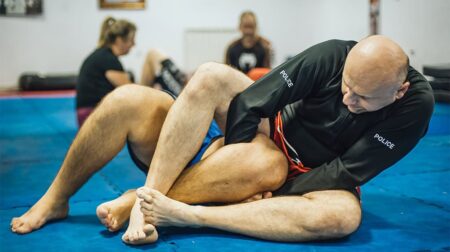





One side praises the raw power and precision of punches and kicks, while the other swears by the grind of takedowns and the art of submissions.
Both are essential tools, but if you had to pick one, which actually gives you the bigger edge?
In this article, we’ll break down the core of MMA striking vs grappling. We’ll be looking at techniques, advantages, and how they shape a fighter’s path inside the cage. We’ll talk about grappling techniques in MMA, the most effective striking techniques in UFC, and how things like takedown defense in MMA change the balance.
By the end, you’ll have a clearer idea of where each shines, and why the smartest fighters don’t rely on just one.
What is Grappling?
Grappling in MMA is when fighters use holds, takedowns, and submissions to control or finish an opponent without striking. At its heart, grappling in MMA is about control. It’s the ability to dictate where the fight goes and how it unfolds.
Unlike striking, which depends on creating damage through blows, grappling is about leverage, positioning, and making your opponent carry your weight, literally and mentally.
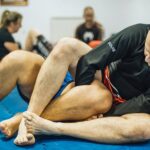
Grappling techniques in MMA range from takedowns to joint locks and chokes. Wrestlers rely on double legs and single legs to drag opponents to the canvas. Brazilian jiu-jitsu specialists hunt for arm bars, triangle chokes, or rear naked chokes once the fight hits the ground.
Judo athletes might toss their opponents with hip throws or trips. Each tool comes from the same philosophy: get control, then impose your game.
Why does it matter? Because grappling can completely shut down a dangerous striker. When a wrestler shoots in, drives his opponent against the fence, and plants him flat on the mat, the punching power disappears.
Grapplers slow the fight down, wear people out, and make them fight on their terms. You often hear commentators say, “He’s dictating where the fight takes place.” That’s the core advantage. Grappling lets fighters pace themselves, conserve energy, and if they’re really good, end the fight with a submission.
In terms of grappling vs striking effectiveness, control often beats chaos. And grappling, at its best, is the art of control.
What is Striking?

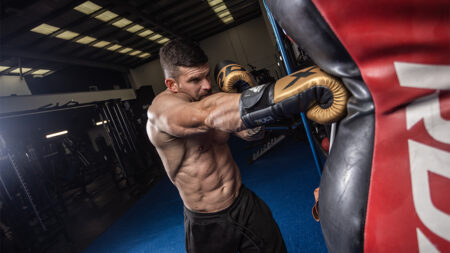
Striking is obvious, you decide the results with powerful strikes. Striking is the other half of the fight, and it’s what most casual fans think of first when they imagine MMA. Punches flying. Kicks cracking against legs and ribs. Elbows slicing through defenses. Knees driving up the middle. It’s the side of the sport that looks explosive and brutal.
Within striking techniques in UFC, you’ll see everything from sharp boxing combos to thunderous head kicks. Leg kicks are used to chop down opponents and limit movement. Jabs measure distance, while hooks and uppercuts break through guards.
Smart fighters pair this with footwork and head movement, weaving in and out of danger. Some strikers overwhelm with volume, while others wait for the perfect counter shot that shuts the lights out.
The advantages are obvious. A skilled striker can end a fight in seconds. Distance management allows them to punish opponents who can’t close the gap. Effective striking breaks rhythm, forces hesitation, and builds pressure. Plus, in terms of crowd excitement, nothing rivals a highlight-reel knockout.
Still, striking comes with risks. Unlike grappling, where damage is often gradual, mistakes in striking get punished fast. One missed defence, one opening, and it’s over. But that’s also what makes it beautiful. When comparing MMA striking vs grappling, striking often feels like a faster route to victory but also a riskier one.


Related Article: How to Improve Striking Accuracy: Precision Training for Fighters
Grappling vs Striking Effectiveness in MMA
This is where the arguments get loud. Which one actually works better? Honestly… it depends.
Grappling first. If a fighter gets close, ties you up, and drags you down, it’s usually game over. On the mat, they set the tempo. They wear you out. They make you carry their weight until your arms feel like concrete. Khabib Nurmagomedov didn’t just win fights. He suffocated people. Grappling shines when pressure never stops and strikers have nowhere to breathe.
But striking is a different story. Strikers own the fight when they can keep it at range. Footwork, timing, distance. Snap a jab. Chop a leg. Keep moving, and suddenly the grappler looks lost. Anderson Silva built his legacy that way. Calm. Accurate. Deadly when you tried to step in.
So, what’s safer? Grappling. It gives control, minimises risk. What’s flashier? Striking. It’s chaos, it’s danger, it’s fireworks for both sides. When does grappling shine? Close the gap. Smother. Grind. When does striking shine? Stay long. Keep the space. Make them pay.
And maybe that’s the beauty of MMA. It’s never just one. It’s the collision.
The Role of Takedown Defense in MMA

Now, here’s the wild card: takedown defense in MMA. It’s the bridge that decides whether striking or grappling rules the night.
Takedown defense is simply a fighter’s ability to stop an opponent from dragging them to the mat. It sounds basic, but it’s everything. A striker with elite takedown defense. Think Israel Adesanya can keep the fight standing and unleash his full striking arsenal.
On the flip side, if a striker has poor defense, even the most lethal hands mean little once they’re pinned on the canvas.
Techniques for takedown defence include sprawls, which flatten an opponent’s shot; underhooks, which create leverage to stay upright; and constant balance adjustments to avoid being toppled. It’s less glamorous than a knockout, but without it, strikers are sitting ducks.
In the eternal grappling vs striking effectiveness argument, takedown defence often tips the scale. Strong defence lets strikers neutralise grapplers, while weak defence almost always leads to defeat.
Grappling vs Striking: Which Should You Focus On?
So, if you’re training, where should you put your energy? Truthfully, it depends on your style, your background, and maybe even your personality.
Grapplers – wrestlers, jiu-jitsu players often focus on takedowns, ground control, and submissions, while sharpening enough striking to defend and set up entries. They’re patient. They thrive on control.
Strikers – boxers, kickboxers, Muay Thai practitioners tend to rely on their precision and speed. They drill striking techniques in UFC-style combos, but they can’t ignore takedown defense. Otherwise, all that talent gets nullified once a grappler drags them into deep water.
So what’s the best advice? Balance. For most fighters, the debate of MMA striking vs grappling isn’t about picking one forever. It’s about building both. If you’re brand new and wondering about the best martial art for MMA beginners, start with what excites you, like boxing, kickboxing, wrestling, or BJJ and slowly round out the rest.
The fighters who last, the champions, are almost always the ones who adapt.
Related Article: Top MMA Gloves For Striking Hard
FAQ’s
Conclusion
So, in the end, who wins the debate of grappling vs striking? The real answer is: neither. Both disciplines are essential. Grappling provides control and safety. Striking delivers excitement and knockouts. The fighters who thrive are those who combine them.
If you’re serious about MMA, don’t box yourself in. Explore both. Learn the grind of grappling, the flow of striking, and the timing of takedown defense in MMA. It’s this mix that builds champions.
Because when it comes to MMA striking vs grappling, the truth is simple: it’s never just one.