



What Is a Hanging Heavy Bag?
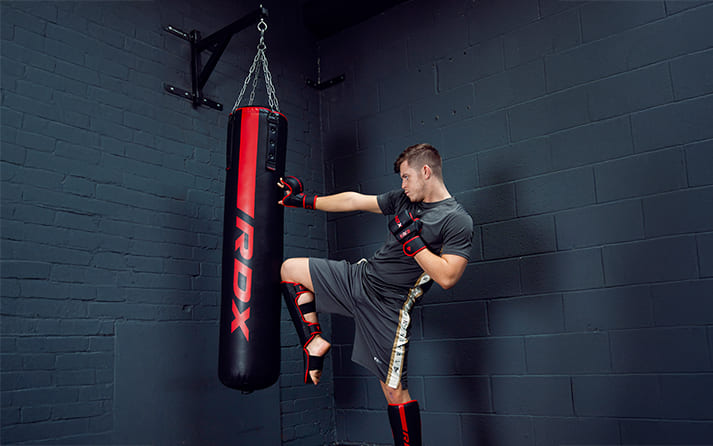
The most authentic representation of boxer training. Whenever you see a training montage, chances are you’ll see this too—the hanging heavy bag. The concept is quite simple: it’s a cylinder-shaped boxing training bag suspended in the air by a wall mount, stand, or directly attached to the ceiling.
The most common weights you’ll find for these are around 60 to 150 lbs, so this thing is made to be immovable. If you want that authentic gym feel, it’s for you. But it’s also ideal for power training thanks to its stability, if you get the right one.
The caveat is that the heavy bag installation may be a hassle for those who don’t have the space or support, since you need a stable mounting system to hang it, preferably one that’s made with quality in mind.
What Is a Freestanding Heavy Bag?
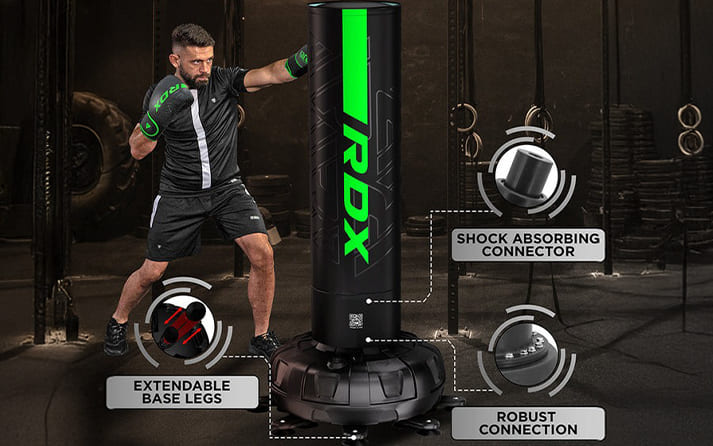
Can’t maintain the space for a hanging heavy bag? Tend to move around? Then maybe the freestanding heavy bag is what’s right for you. Bottom line is that, unlike its counterpart, this one is a punching bag with stand, usually filled with water or sand, depending on what you get.
It’s easy to install and is perfect for a beginner to get used to. It also helps that you don’t need any drilling to set it up, so property damage is no concern.
But, you might find it can’t sustain you for long since they tend not to handle stronger strikes as well, which means more tipping or sliding. Still, for a home boxing gym setup, you won’t find a better fit for you, especially if you get it from somewhere reputable.
Related Article: Do Amateur Boxers Hit Hard? Punching Force & Training Secrets
Freestanding vs Hanging: Key Differences
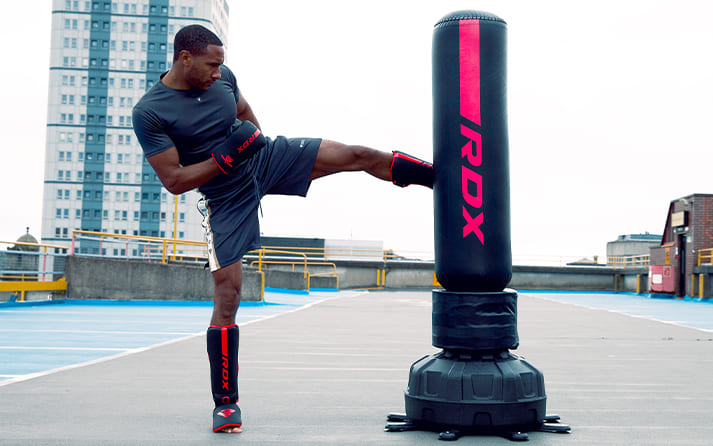
Now, between the freestanding vs hanging heavy bag, there are a few more differences you ought to know if you want to pick what’s right for you:
Installation
A hanging heavy bag needs proper support if it’s going to be of any use to you, which is why it needs to be installed, preferably with a mount.
Freestanding heavy bags are more of the plug-and-train variety since their weighted base is used to keep them stable.
Durability
The hanging heavy bag is made to be much more durable because of its extra weight and to make sure it can handle all of the strikes coming its way.
While the freestanding heavy bag is no slouch, it doesn’t have the same heavy bag durability as its counterpart.
Mobility
Thanks to their weighted base, freestanding heavy bags are a lot more mobile and are ideal for moving between rooms or locations.
Hanging heavy bags tends to stay in one place because of their mount and moving them around usually means going through a lengthy process.
Training style
Of course, the most important factor to remember is how it fits in your style of fighting. Every boxing style has its own needs and you can find something in each one.
The hanging heavy bag’s weight makes it ideal for boxing conditioning drills that focus on footwork or the timing of your swings.
Freestanding heavy bags work for practicing your combos or stationary drills. Their mobility means you can place them comfortably for testing your lateral movement or even practicing with a partner.
Space
The thing to remember vis-à-vis freestanding vs hanging heavy bag is that both take up a certain amount of space. A freestanding bag is more compact and can work anywhere pretty easily, whether you’re in an apartment or you want to practice in your garage..
The hanging heavy bag needs overhead or wall support so you have to have an idea of placement before you can consider buying it.
Pros & Cons Breakdown
So, the bottom line is, each side has its pros and cons, and we’re going to break it down for you:
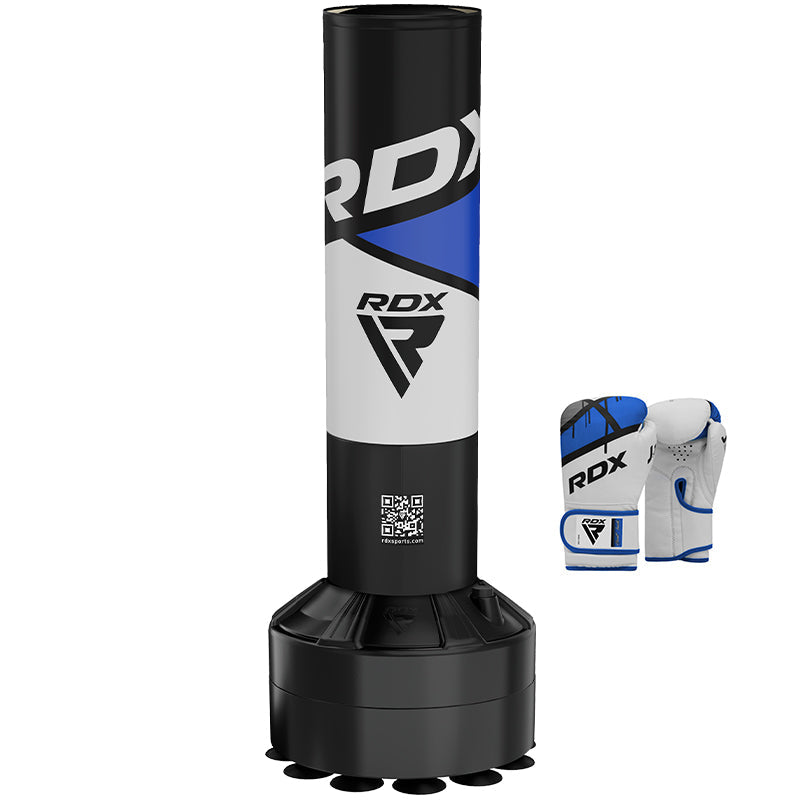
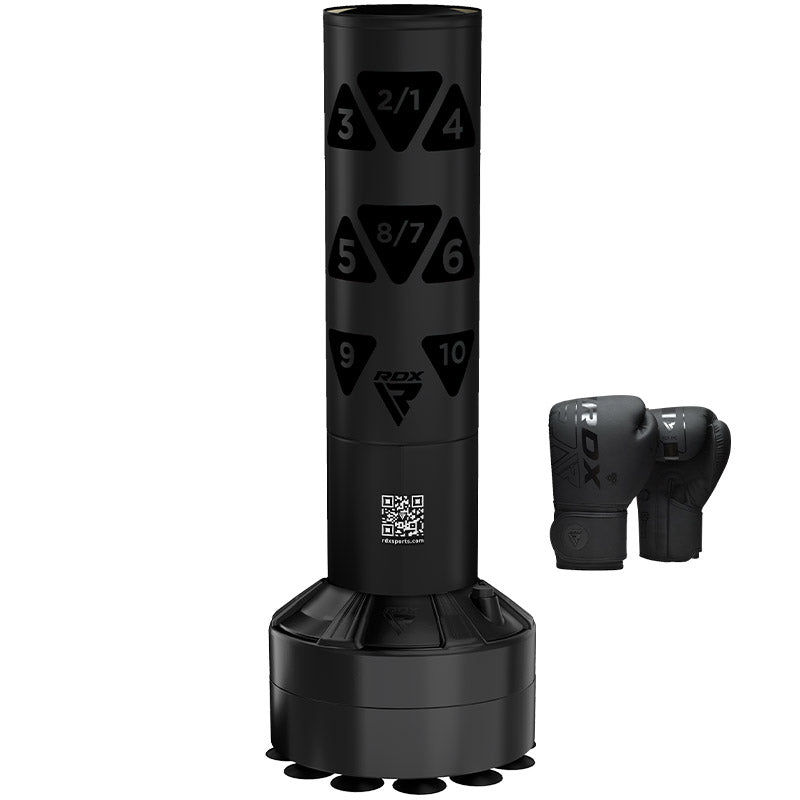
1. Free Standing Pros
- Mobile so you can take them with you anywhere you like.
- Only setup is filling in the sand at the base, after which the freestanding heavy bag is ready for your strikes.
- Versatile in how you want to use it.
- Great for beginners who want to dip their toes in any field of boxing.
2. Free Standing Cons
- Tend to tip when too much force is applied.
- Durability tends to be weaker than its competitors, especially under power punches.


3. Hanging Pros
- Durable enough to handle anything you throw at it.
- Swings when struck realistically which helps with timing.
- Great for conditioning drills since you don’t have to chase it thanks to its weight.
- Great for those trying for an authentic gym feel.
5. Hanging Cons
- Need to install it first to get it working.
- The hanging heavy bag isn’t very portable.
Which Heavy Bag Should You Choose?
The honest truth is that the kind of heavy bag you end up getting all comes down to preference, but we can make it easier to choose by giving you a little direction.
Beginners
You’re just starting out. You need something simple and easy to handle. You want to get a feel for it before you consider investing your time. In that case, the freestanding heavy bag is for you, especially if you’re going for a home boxing gym setup.
Intermediate/advanced
You’re no rookie. You have the skill. You already put the time and effort in. But you want something that can handle you. That’s why you should go for the hanging heavy bag. It’s durable and more realistic. Ideal as a boxing training bag.
Kids/teens
You want to bring some focus to your kids’ lives. You want to put some discipline in their lives. Make sure they can defend themselves. Well, you can’t go wrong with a freestanding bag. Though it should be one of the lighter options.
Apartment/home setups
You want to get into boxing but you don’t have the space to put one or the right to modify the place. In that case, the freestanding heavy bag is easy to install and very mobile so it can go where you need it.
Dedicated gym setups
You’re not here to try out a new hobby or test the waters. You know what you want and you’re invested. You want something for your gym. Something that will last. You need a heavy hanging bag. It’s durable, powerful and fits the vibe of a gym better than anything else.
Suggestion
For a lot of boxers, they don’t stick to one or the other. In fact, they tend to get a variety of boxing training bags. So if you have the space and the price range, we’d advise you to consider getting both types to make sure there’s no gap in your training.
Training Tips for Both Bags
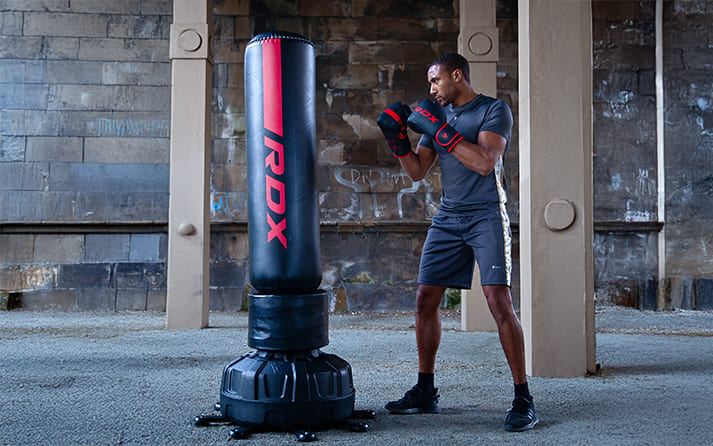
Whether it’s a freestanding vs hanging heavy bag, there are a few things universal to both and we have some tips you want to consider.
- Make sure to wrap your hands and wear gloves if you plan on striking.
- Mix up your boxing conditioning drills. Switch up your rounds to keep yourself ready in any stance.
- On hanging heavy bags, practice your swing timings. Your angles. Your footwork.
- For freestanding heavy bags, work on your speed. Your precision. Your combos.
Related Article: How to Use Boxing Hand Wraps: For Beginners
FAQ’s
Conclusion:
The right boxing training bag can make all the difference in your training. If you want good heavy bag durability, the feel of an authentic gym experience or you’re going for serious training, you want the hanging heavy bag. But if you’re going for convenience, portability or you’re just starting out, consider the freestanding heavy bag.
But all of these factors depend on what suits your budget, your space or your training style. Just remember that, regardless of the whole freestanding vs hanging heavy bag debate, consistency in training matters more than the bag itself.