


Gloves are a symbol of protection to a lot of folks, but they’re also power. They take all the beating and keep your hands safe behind the cushioning. How do those gloves take that kind of beating? Do you ever think about how your gloves are made? If you do, this blog is for you.
Because we’re going behind the scenes of MMA glove manufacturing. In every aspect actually. You’ll see how craftsmanship, technology, and fighter input collide to build something tougher than it looks.
Let’s peel it back.
The Importance of MMA Gloves in Combat Sports
In intense and dangerous sports like MMA, gloves become your armor. If you don’t have them on, you are done for. It’s the gloves that protect knuckles, stabilize wrists, and still let you grab, clinch, or choke.
They’re small and light, but they are perfectly engineered for chaos. You may not think much of them if you haven’t experienced the level of protection they offer. Boxing gloves protect, too. However, unlike boxing gloves, which are large and padded for prolonged slugfests, MMA gloves are quite petite.
That’s because they serve different purposes. They need to strike and grapple. That’s why they have to be designed in a way that striking and grappling are not obstructed in any way. When it comes to MMA gloves design, comfort and movement matter a lot. That’s because of what MMA is: intense, fast, and relentless.
A glove that slips, pinches, or feels stiff can ruin your flow. The right pair feels invisible. So yeah, these gloves do a lot more than most people think. They’re a mix of science and instinct. Protection wrapped in precision.
The Design Process: Crafting the Perfect MMA Glove
It always starts with an idea. Or sometimes, a problem.
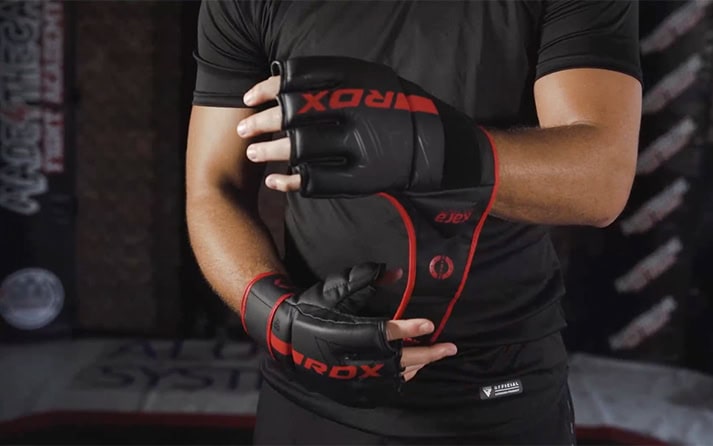
Designers talk to fighters. Customer reviews are taken into account. They ask how does the glove feel mid-fight? Are they too tight on the wrist? Too soft on impact? These questions and details impact the next design or the revisions of the old one.
That’s how good MMA glove manufacturing begins, based on the experiences of fighters. The goal is simple: protection without restricting the flow of the movement. You need to hit hard, but also grip fast. That balance? It’s tough to get right.
These factors matter
Choosing Materials
Leather. Synthetic leather. Foam. Mesh. Each piece is chosen for a reason. Leather gives durability and that solid “fight feel.” Synthetic options? Lighter, more affordable, and easier to clean. Beneath it all sits layered foam that takes the hit so your hands don’t.
Even finger loops and linings are fine-tuned. They control airflow and comfort. Because if a glove overheats or rubs too much, it’s game over before the fight even starts.
Prototypes and Testing
Once the first model’s ready, it’s tested with hard sparring, grappling, and bag work. Real fighters give real feedback. Then designers tweak, redesign, and tweak again.
The best gloves go through dozens of versions before they’re right. It’s not fast. But it’s worth it.
Related Article: Must Have Training Gear for all Martial Arts Fighters
Manufacturing Process: How MMA Gloves are made in the Factory?
Now, let’s get acquainted with the actual process. Let’s see how MMA gloves are made in a factory.
You’ll hear machines buzzing, cutters slicing through leather, and workers stitching at lightning speed. It’s busy, loud, and oddly precise. But it isn’t a real explanation, this is:
Step 1: Cutting the Materials
Big rolls of leather or synthetic fabric are laid out flat. Each piece is cut into exact shapes — fingers, palms, knuckles, straps. Some factories use laser cutters now. Perfect edges. No waste.
Step 2: Assembling the Components
This part’s half machine, half human magic. Workers stitch each section together, layer by layer. The palm connects to the knuckle pad; the wrist strap attaches last. High-stress areas like fingers and knuckles? Double-stitched for strength.
One loose seam could ruin a whole batch. So yeah, they’re careful.
Step 3: Padding & Protection Layers
Then comes the foam. Multiple layers, sometimes with gel inserts, are placed in the glove shell. This is where the protection lives. Too much foam makes the glove bulky. Too little, and it’s dangerous.
Step 4: Quality Control
Before a glove leaves the line, it’s tested. Workers bend it, stretch it, and punch-test it. Stitching, symmetry, and padding, all checked.
The gloves that pass are the real deal. The rest get fixed or scrapped. That’s the gist of MMA gloves production, equal parts sweat, skill, and science.
Related Article: Top MMA Gloves For Striking Hard
The Technology behind MMA Glove Production
Old-school craftsmanship still matters. But now technology has joined the fight. Factories use computer-aided design (CAD) to build virtual glove models before a single piece is cut. It saves time and it also avoids mistakes.
Laser cutting is also used to make sure each panel is precise. That means a better fit and consistency from one pair to the next.
Custom Fit Tech
Some brands take it even further. 3D molds, adjustable wrist systems, ergonomic padding — all made to match your hand shape. It’s like custom armor for your fists.
Material Innovation
Gloves now use breathable mesh, anti-microbial liners, and upgraded foams that bounce back faster. Water-resistant coatings keep them cleaner, longer. These materials bring comfort and durability. They make sure users have no itching, no sweating, and no discomfort at all.
How MMA Gloves are tested for Quality and Performance?

They’re tested under real fight-like conditions – punching pads, absorbing hits, surviving grappling pulls. It’s brutal. But necessary.
Real-World Testing
Machines can simulate impacts, but nothing beats fighter feedback. Real athletes wear them during sparring to see how they perform when adrenaline kicks in.
Durability and Safety Standards
Every glove has to meet safety certifications for shock absorption, wrist support, and finger protection. If it fails, it doesn’t ship. Simple as that. That’s the difference between a training glove and a trusted glove.
The Different Types of MMA Gloves
Now that you know how MMA gloves are made in a factory, it’s about time you know the types. Walk into any gym and you’ll spot the difference right away.
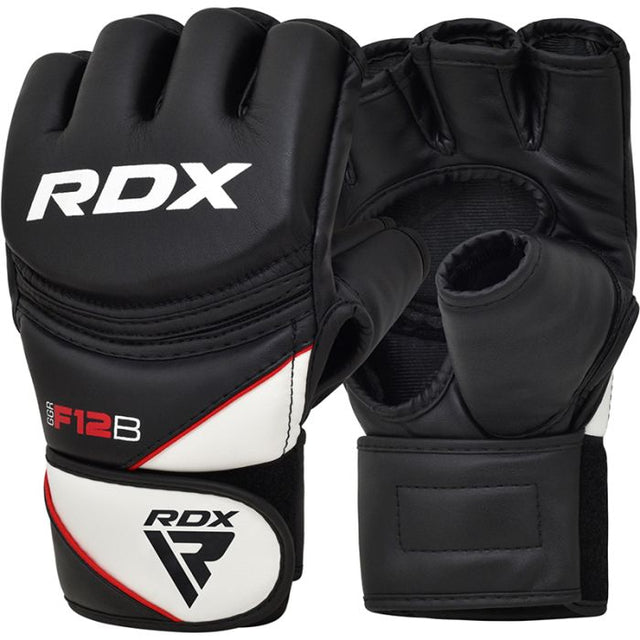
1. Training Gloves vs. Fight Gloves
- Training gloves are your workhorses. More padding, softer impact. You can spar without destroying your partner.
- Fight gloves? Smaller, tighter, meaner. They pack more punch and less cushion.
2. Open-Finger vs. Closed-Finger
- Open-finger gloves are classic MMA – perfect for grappling and submissions.
- Closed-finger versions are more for striking or hybrid training sessions.
3. Custom Gloves
The custom gloves are built for pros who want everything just right. Custom padding, fit, color, and even logo placement. In MMA gloves manufacturing, those details matter.
Because for fighters, gloves aren’t just gear. They’re an identity.



How MMA Gloves have evolved over time?
The early days of MMA were wild. Bare-knuckle, messy, and dangerous. Gloves came later — and they’ve changed a lot since.
At first, they were simple. They had thin padding, minimal stitching. But as the sport grew, so did the technology. Modern MMA gloves design focuses on safety without sacrificing feel. Foam got smarter. Wrist wraps stronger. Fabrics lighter.
Now, MMA gloves production uses everything from high-tech stitching to moisture-control liners. Regulations got tighter too, pushing companies to build safer, better gloves.
What started as raw protection evolved into performance engineering.
FAQ’s
From the first sketch to the last stitch, making MMA gloves is part craft, part obsession. Every design gets tested, torn apart, and rebuilt until it feels right. They’re not just gloves. They’re a fighter’s second skin. Built tough. Tuned for movement. Designed to take a beating and come back for more. So next time you slide your hands into a pair, take a second.
Think about the work behind them, all the hours, the testing, the people shaping them by hand.
That’s how MMA gloves are made in factories. Not just with machines. But with patience, precision and a whole lot of passion.