



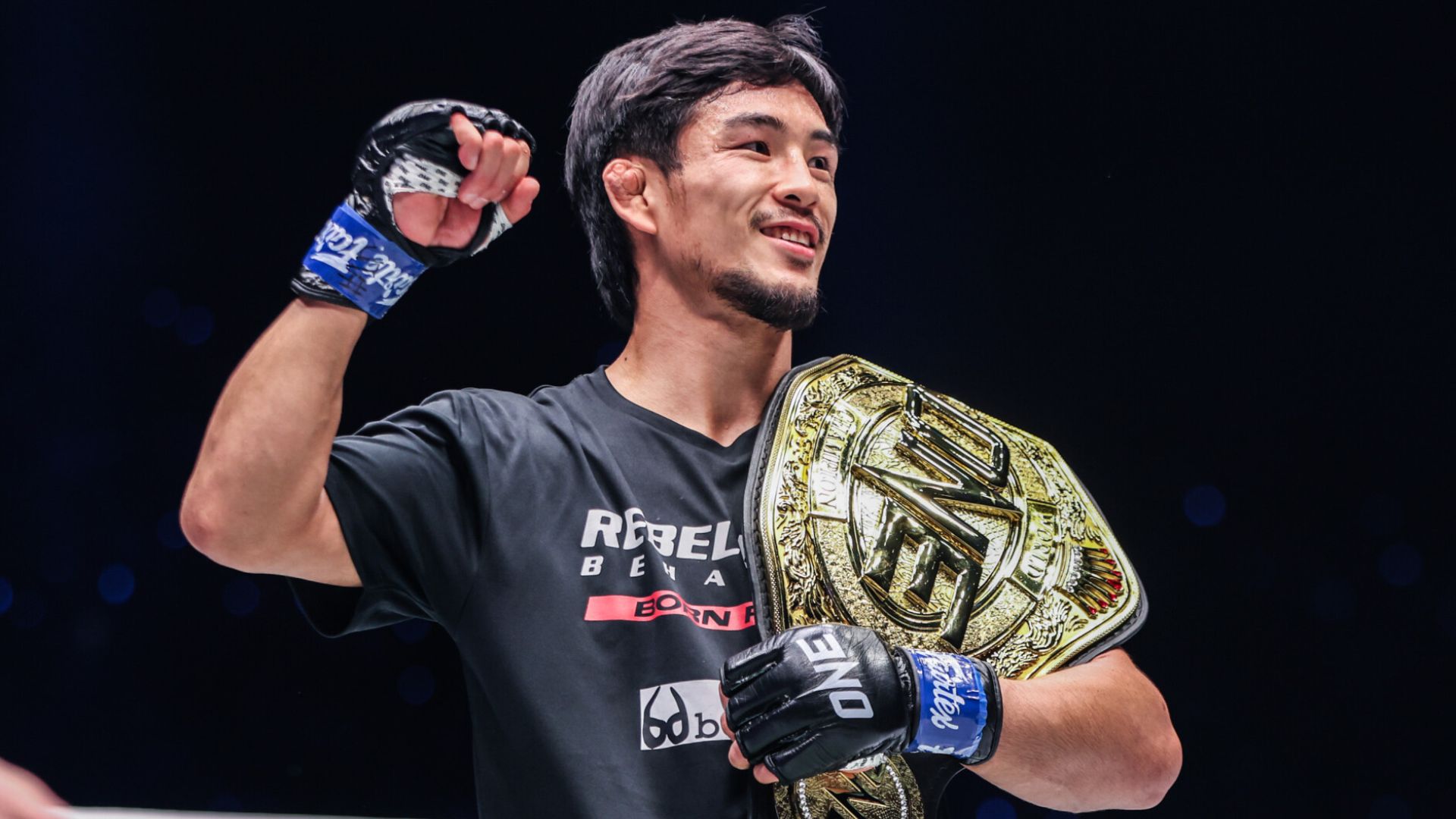
The Japanese fighter’s journey to the belt spanned years of painful defeats and persistent doubt. His first encounter with Adriano Moraes at ONE X ended in loss, joining his earlier defeat to Demetrious Johnson as evidence that elite-level success remained just beyond reach.
March changed everything. Wakamatsu’s first-round technical knockout of Moraes at Saitama Super Arena validated years of sacrifice while providing the career-defining moment he spent his life pursuing.
“At the March event, everything just came together,” Wakamatsu said.
“I was at my peak, and I captured the title at that moment. It was truly the best moment of my life.”
But belts bring responsibilities that title challengers never face. Wakamatsu now represents the division’s elite status while understanding that former champions and hungry contenders create constant threats. His approach to this reality reveals his mindset — treating every defense as if his career depends on the outcome.
“I want to prove ONE’s flyweight division is the best in the world,” he said.
“That’s why I absolutely cannot lose. For me, losing basically equals death. I’ll fight as if it’s my last.”
That intensity stems from understanding how quickly opportunities close. His path included years of near-misses before breakthrough success, teaching him that these things rarely come twice. Now he guards his achievement with the desperation of someone who remembers life without it.
Pacio, on the othert hand, brings legitimate credentials to this challenge. The reigning ONE strawweight MMA world champion seeks to become the Philippines’ first two-division MMA king, creating pressure that extends beyond individual achievement. His recent second-round technical knockout victory over Jarred Brooks validated his finishing ability while proving he belongs among elite competition.
The tactical matchup favors neither fighter definitively. Pacio’s versatile skills and championship experience contrast with Wakamatsu’s defensive improvements and home-crowd advantage. Both possess finishing ability that could end the contest suddenly.
For Wakamatsu, the defense carries additional meaning beyond championship retention. He wants his performance to inspire fellow Japanese athletes while proving the flyweight division’s elite status on a global stage.
“If people see me giving everything in the fight and think, ‘Wow, that’s amazing. I want to try too. I can do it too,’ then honestly, that’s enough for me,” Wakamatsu said.
His mentality reflects someone still processing his achievements. He occasionally forgets he holds the belt, suggesting it hasn’t fully registered despite months of carrying it. That disconnect creates interesting psychology — a champion who still approaches contests with challenger desperation.
“Sometimes I just think, ‘Oh right, I’m the champion.’ I forget I’m the champion. But my mindset hasn’t really changed. Honestly, it still doesn’t feel real to me,” Wakamatsu said.