



Why a Strong Chest Matters?
Is it just about dashing looks, or are there actual gains? Take a look at these points to let you know why you need a strong chest:
- Gives you a better posture
- Boosts shoulder health
- Increases your upper body strength
- It’s a workout with visible gains
- Boosts athletic moves like throwing, pushing, and lifting
The Best Chest Exercises for Mass and Strength
Want to do the best chest exercises that strengthen your chest and give you a great show too? Here are some awesome ones:
Flat Bench Press
Every solid chest routine starts with the flat bench press. It’s kind of a classic. Heavy bar, steady push, and you’ll feel it right through the middle of your chest. It’s been around forever for a reason, and that reason is it’s the perfect chest exercise.
Incline Chest Press
Want something more interesting? The incline press. It adds shape, that kinda rounded look near the shoulders. Nothing flashy, but it makes a big difference.
Decline Chest Press
Then there’s the decline press. Some people skip it, thinking it feels like an extra. But if you want that fuller, more complete chest, the decline is worth incorporating into your routine. It hits the lower portion in a way that the other two just don’t.
So yeah, none of this is rocket science. Flat, incline, decline, the basics. They’re not fancy, but put together, they cover the whole chest. Stick with them and, honestly, you’ll be surprised how quickly things start to change.
Related Article: The Ultimate Resistance Band Chest Workout
Push-Ups Exercises for Your Chest
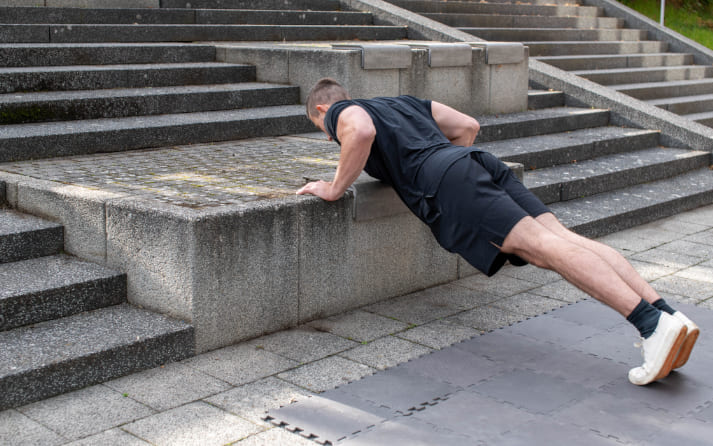
Don’t sleep on push-ups. They’re simple, but they hit hard. They fire up the chest almost as much as the bench press. That means real strength, no weights needed.
Incline Push-Ups for Upper Chest
Want the upper chest to pop? Put your feet on a bench. That angle pushes more work onto the upper pecs. Science backs it: changing the angle changes the muscle focus. Adjust the angle a bit and give your upper chest the boost it needs.
Decline Push-Ups for Lower Chest
Now flip it. Hands on a bench, feet on the floor. Decline push-ups torch the lower chest. Tougher than the regular kind, but great for a fuller look.
Mix It Up for Growth
The win with push-ups? Endless tweaks. Mix regular, incline, and decline. Hit every part of the chest. Build size, build strength, and do it anywhere.
Chest Dips for the Lower Chest and Triceps
Chest dips are bodyweight gold. They hammer the lower chest and triceps harder than most exercises. Dips activate the pectoralis major at a high level, making them one of the best chest exercises for size and strength.
How to Nail the Form?
Form decides everything. Lean your torso forward, elbows slightly flared, and lower until your upper arms are parallel to the ground. This shifts tension from just the triceps into the lower pecs. Your body angle strongly affects which muscles do the heavy lifting.
Progress With Weighted Dips
Once body weight feels easy, strap on a dipping belt. You need to give your muscles a push so they don’t stop growing. Weighted dips overload the chest and triceps, driving muscle growth. Progressive overload, adding weight over time, increases both strength and hypertrophy.
Chest dips are simple but extremely effective and scalable. They’ll carve out your lower chest and pack on tricep power real fast.
Upper Chest Workout: How to Focus on the Upper Pecs?
The truth is, most people’s chest workouts lean too heavily on flat pressing. Great for mass, sure, but then you look in the mirror and wonder why the top of your chest looks a bit… empty. That’s where an upper chest workout comes in.
Incline Chest Press
The cornerstone here is the incline chest press. Set your bench somewhere between 30 and 45 degrees. Too high and you’re basically doing a shoulder press, too low and you’re back to flat bench territory.
Play around with the angle. Even a small adjustment changes the way it feels. And honestly, that little burn across the upper pecs tells you you’re in the right spot.
Incline Dumbbell Flyes
Then there’s the incline dumbbell flyes. These are sneaky. They don’t look like much, but the stretch you get at the bottom and the squeeze at the top light up the upper chest in a way pressing alone can’t. It’s not about the heaviest dumbbells either; control beats ego here.
So yeah, if you’ve ever felt like your chest is strong but not quite “finished,” dialing in the incline work may be the missing piece.
Lower Chest Workout: How to Develop a Fuller Chest
When people talk about chest training, the lower portion usually gets forgotten. Which is funny, because a strong lower chest can completely change how your torso looks: fuller, more defined, more “finished”. That’s the whole point of a good lower chest workout.
Decline Chest press
Start with the decline chest press. Drop the bench to a slight decline and press the bar or dumbbells upward. Because of the angle, the load shifts toward the bottom of your pecs. It feels a bit strange at first, like you’re sliding backwards, but once you find your groove, it really fills out that lower shelf of the chest.
Decline Dumbbell Flys
Next up, decline dumbbell flys. Same setup, but instead of pressing, you open your arms wide and bring them back together in an arc. Don’t rush it. The stretch at the bottom is where you’ll feel the pecs really lengthen, and the squeeze at the top? That’s where the magic happens.
Chest Dips
Finally, chest dips. Lean slightly forward, lower yourself until your elbows hit about 90 degrees, then press back up. If you stay too upright, you’ll feel it more in your triceps, so the forward lean is key. Done right, dips carve out that lower chest line everyone secretly wants.
To be honest, none of this is complicated. But if you’re chasing a chest that looks strong from top to bottom, these moves make a world of difference.
Related Article: Bodyweight Exercises to Build Muscle: The Complete At-Home Plan for Bigger Chest, Back & Legs
How to Structure a Chest Workout for Maximum Gains?
A good chest workout isn’t just about what exercises you pick, it’s about how you put them together. Think of it as building a meal – you want the heavy stuff first, then the sides, and maybe a little extra for flavor.
Warm-Up
Always start with a warm-up. Nothing fancy. A couple of light sets of push-ups or even some empty-bar bench presses. Gets the blood moving and saves you from that awkward shoulder tweak that ruins a whole session.
Compound Movements
Then move into the big lifts. Compound movements like the flat bench, the incline press, or even bodyweight dips if you’re strong enough. These are your bread-and-butter chest exercises, the ones that let you move real weight and build real mass. I think of them as the foundation; everything else just fills in the gaps.
Isolation Exercises
Once the heavy pressing is done, switch gears into isolation. Flyes, cable crossovers, maybe even high-rep push-ups to finish. These don’t need to be max-effort; they’re more about feeling the stretch, the squeeze, and getting that upper-chest pump everyone secretly checks in the mirror.
Rest
Rest matters too. For pure strength, longer breaks, say 2 minutes. For hypertrophy, shorter rests around 60–90 seconds keep the chest under tension.
And here’s the kicker: once a week probably won’t cut it. Hitting chest 2–3 times a week with a mix of heavy days and lighter, higher-rep sessions is what really brings the best results. Call it balance, or just call it consistency.
Either way, that’s how the best chest exercises actually work. Just avoid common chest workout mistakes like wrong form and unnecessary weight, and you’ll be good to go.
FAQ’s
Conclusion
Want a bigger chest? Do the basics well. Bench, push-ups, dips. Add incline and decline sometimes. Keep your form tight and don’t rush the weight. Train regularly, rest enough, and push with purpose. Results come from small wins stacked day after day. Show up, grind, grow.