


The move shines from the front headlock. You sprawl, they turtle, and you wrap. It’s also right there from side control when your opponent reaches across. That’s when it hits like a trap. It’s part of the same family as the anaconda choke and arm triangle choke, but with one big twist: the angle of pressure. The Darce choke tightens from a side bend instead of a roll. That’s what makes it unique.
If you’re serious about control and finishing, you need this in your game. Let’s break it down, step by step.
What Is the Darce Choke and Why It Works?
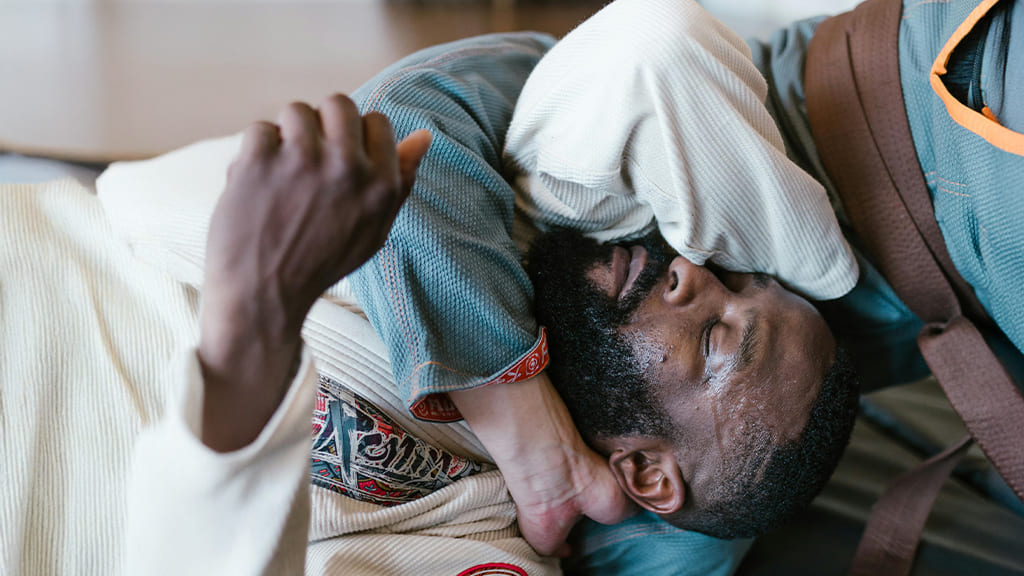
The Darce choke shuts the lights out by cutting blood to the brain. It’s a head and arm choke, but with a different twist. You thread your arm under their armpit, reach across their neck, and lock your hands like a vice. Their own shoulder gets crushed into one side of their neck. Your bicep closes the other. It’s tight, fast, and brutal. This isn’t an air choke. It’s pure blood. A few seconds is all it takes to submit to this head and arm choke.
People confuse the Darce choke with the brabo choke or the anaconda choke. Same family, different grip paths. The anaconda choke wraps under the neck and rolls forward. The brabo is more common in the gi. The Darce dives deep and closes like scissors, often from the front headlock. You sprawl, control the head, and sneak your arm through. They reach? They’re toast. They turtle? That’s your setup.
It’s also nasty from side control. Or even during a scramble. Anytime their arm slips up near their head, the window opens. What makes it dangerous is how it blends control and surprise. It’s not just tight. It’s sudden.
Related article: Top 5 Heavy Bag Drills to Improve Power and Technique
Step-by-Step: How to Execute the Darce Choke?
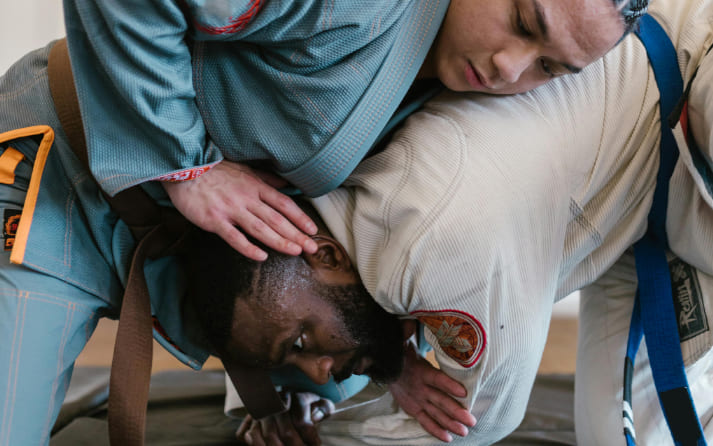
The Darce choke starts with control. You’ve got your opponent in a front headlock or after a clean sprawl. They’re reaching, defending, maybe trying to stand or dive for a leg. That’s your window.
Slide your arm deep under their far armpit. Aim for the space behind their neck. Your hand comes through to the other side of their head. Wrap it tight. Grab your own biceps or go palm-to-palm, either works. But make sure your grips don’t slip. That kills the pressure.
Now drop your chest low. Sprawl your hips out. This adds weight and makes it harder for them to scramble. Start walking your hips toward their trapped arm. Don’t rush. That angle turns their own shoulder into a weapon. They won’t last long.
If they’re in the turtle position, it’s even tighter. From side control, you can bait the underhook, snap them down, and wrap it up the same way.
Most mess it up by staying too high or letting the grip float. Or they don’t block the hips and lose the angle. Fix that by staying heavy, tight, and close. Lock your hands early. Adjust as you squeeze. Stay calm while they panic.
The Darce choke is one of those submission techniques that works fast when done right. It’s a mix of pressure, control, and surprise. You don’t need brute force. Just smart mechanics. It’s not joint locks. It’s a blood choke. One of the most effective chokeholds in all of grappling martial arts is indeed joint locks.
Related article: Advanced Kickboxing Techniques to Improve Your Strikes
Top Positions to Set Up the Darce Choke
The Darce choke isn’t a one-trick move. It’s a weapon that lives in scrambles, counters, and broken rhythm. If you train to see it, it’s everywhere. You just need to know where to look.
Start with the front headlock. You shoot a guillotine, they defend. Snap them down, shift your weight, and wrap your arm deep. If they base out or try to circle, perfect. The D’arce choke slides in naturally when their posture is low and their arm is extended across your body.
Next is the turtle position. Maybe you sprawled on a shot. Maybe they bailed on a bad position. When they turtle up, they’re trying to stay safe. That’s your cue. Thread the arm, sink your grip, and punish the shell. Some call this the across the collarbone Darce choke, it hits faster when they don’t expect it.
From side control, it’s all about reaction. If your opponent starts turning into you and reaches with the far arm, wrap it. That’s your entry. Don’t wait. Slide under, lock it up, and squeeze.
All of these setups blend best when you chain them. Drill guillotine-to-Darce. Kimura-to-Darce. Even miss an arm triangle choke on purpose and switch mid-flow. This keeps opponents guessing and opens up clean submission lanes.
The beauty of the Darce is how smoothly it fits into transitions. Snapdowns, sprawls, hip-switches, they all lead there. That’s why every serious grappler drills it from side control, turtle, and front headlock.
Darce Choke vs Anaconda Choke vs Arm Triangle
These three chokeholds look similar. But the details matter and knowing when to use each one can be the difference between a tap and a scramble.
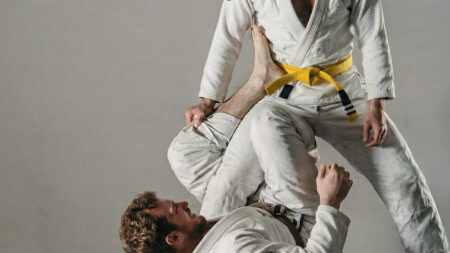
The Darce choke works best when you’re on top and your opponent’s arm is reaching across their body. You thread your arm under their far armpit and around their neck. Lock the grip, drop your chest, walk your hips, and squeeze. It hits fast in scrambles and transitions, especially from sprawl, front headlock, or turtle.
The anaconda choke flips that logic. You thread over their head and under the near armpit. Roll them, lock it tight, and finish on top. It’s cleaner when you catch someone during a shot or when they’re lazy posting off the mat. Think of it as the mirror image of the D’arce choke.
The arm triangle choke is slower but powerful. From top mount or side control, you trap their arm against their neck with your own shoulder pressure. No rolls. No fast entries. Just steady squeeze and patience. It’s more of a control-based finisher than a fast-attack submission.
So when should you go for which? Darce when you’re high and they reach across. Anaconda when their arm’s close and their head is low. Arm triangle when you’re already tight on top. They’re all part of the same family. The key is reading the moment and knowing which one fits. Whether you finish across the collarbone Darce choke or a deep Brabo choke, timing is everything.
Related article: Top MMA Injuries and How to Prevent Them: A Fighter’s Guide to Safety & Recovery
Advanced Darce Choke Variations and Transitions
Once you’ve got the basic Darce down, it’s time to level up. Variations and transitions make this choke even more dangerous, because if one angle doesn’t work, another one will.
The across the collarbone Darce choke is a favorite among high-level grapplers. Instead of wrapping too deep and losing pressure, you keep your choking arm shallow and angle across the collarbone. It feels tighter, hits quicker, and gives you more control. The finish happens with less squeeze and more precision. It’s brutal when done right.
Miss the choke? No problem. If they defend by turning into you, ride that energy into mount or even a slick back take. A failed Darce isn’t the end. It’s just another way to move to an even better spot.
Switch to the Brabo choke. Same mechanics, different grip. Use the lapel to lock it up, and if you like to roll, drill setups that start from sprawl or front headlock and roll into position, catching opponents off-balance.
These transitions keep opponents guessing. That’s the real power of the Darce, it’s not just one move. It’s a system. Once you connect the pieces, you’re always one step ahead.
Training Tips to Improve Your Darce Choke
If your Darce choke keeps slipping or lacks squeeze, you’re probably missing two things: arm depth and head positioning. That’s where the power lives. Your choking arm should slide deep under the far armpit, while your chest presses into the back of their head. This folds their neck and cuts space, turning pressure into a tap.
Start with positional drills. Set up from sprawl and turtle, where the choke shows up often. Lock the position before worrying about the finish. This helps build patience and control under stress, which matters way more than speed. Drill this with resistance. You’ll quickly see what breaks down under pressure.
Grip matters too. Palm-to-palm or gable grip, whichever lets you crush tighter without burning out your forearms. Don’t hold your breath. Use proper breathing mechanics to stay calm while applying pressure. Your hips? They’re not just support. Drop and sprawl to add weight into the choke, and walk your hips toward the trapped arm to seal it.
You’re not just working on a single move. You’re training a grappling martial art mindset, one that links submission techniques with control, pressure, and timing. Nail the little details. That’s what makes the Darce deadly.
Related article: MMA Mitts vs Boxing Gloves: Which One Hits Harder?
Conclusion
The Darce choke isn’t just a flashy move. It’s a weapon. A tight, technical finish that works in real fights, in submission grappling, in MMA, and on the mats. It’s dangerous from the front headlock, slick from side control, and absolutely brutal against a panicked turtle. It’s related to the arm triangle choke, but has its own timing, angles, and attitude.
Want to get good at it? Drill it. Over and over. Fix your grips. Learn when to squeeze and when to float. Refine your body mechanics until the setup feels like second nature. Mastering the Darce doesn’t just give you one choke, it gives you a system. A trap. A world of pressure and finishes waiting to unfold.