


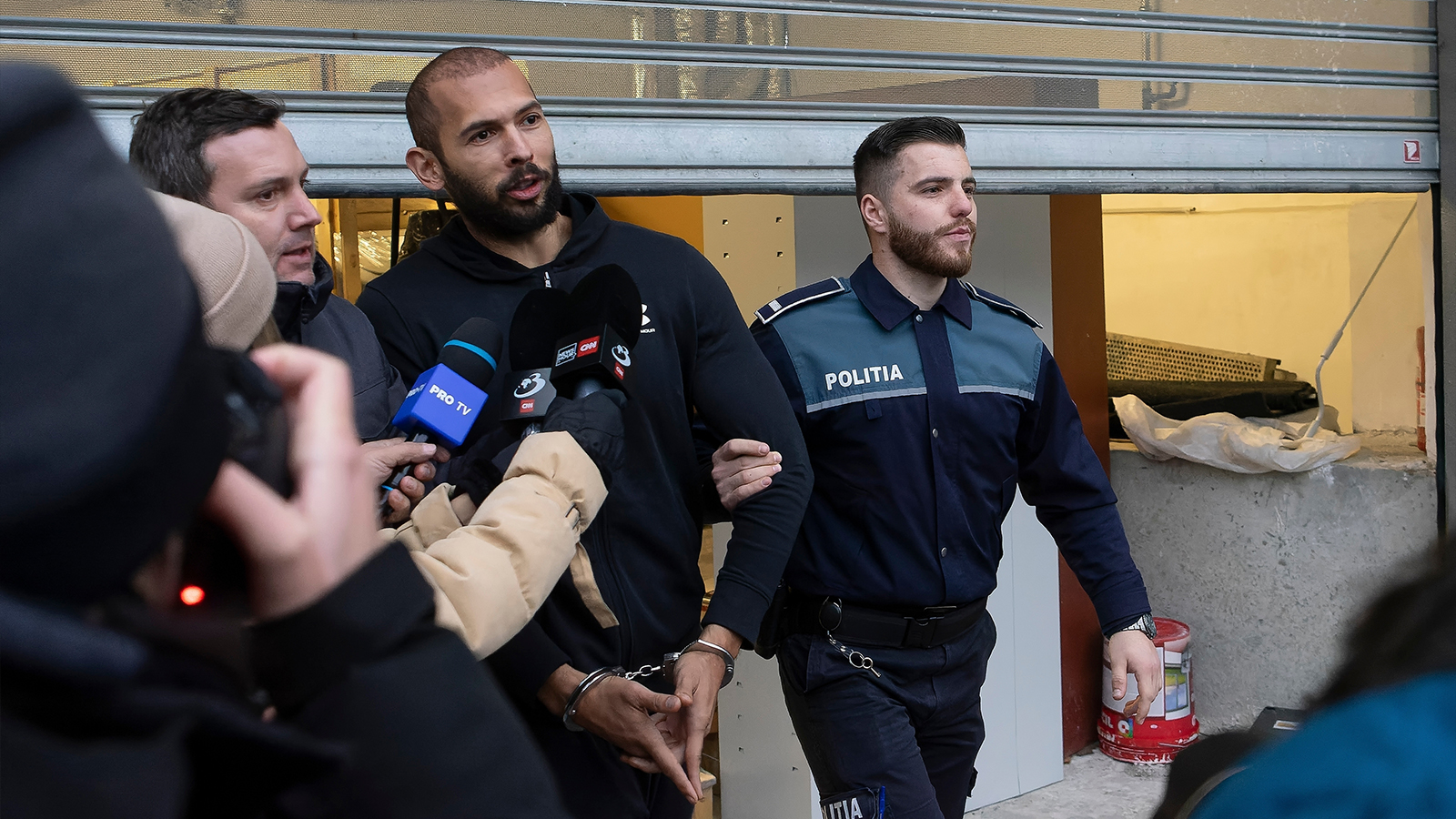
From his beginning in the sport to his titles and accomplishments, from his most memorable battles to his eccentric fighting style, let’s explore Andrew Tate’s kickboxing career. We will get rid of the buzz and investigate whether Andrew Tate’s kickboxing career matched what he stated. You will know Andrew Tate’s record, his opponents, his game plan in the ring, and how he stacks up against other legendary kickboxers throughout the history of the sport.
So, was Andrew Tate a world-class fighter or just an admirably promoted athlete with a good record? Let’s analyze the data and answer that query with real facts, professional opinion, and a thorough analysis of his legacy in the kickboxing industry.
1. Early Life and Entry into Kickboxing
Emory Andrew Tate III was born in Washington, D.C., in 1986. He spent most of his childhood in the UK, residing in Luton. Tate grew up in a very unusual and highly competitive home environment. His father, Emory Tate Sr., was a highly renowned international chess master who was recognized for his genius and innovativeness on the board. This environment developed in Andrew an appreciation for competition, strategy, and discipline.
As much as chess used to sharpen his brain, it was a martial art that caught both his body and mind. At the age of 15, Andrew embarked on kickboxing adventures. The initial gym he started going to was within walking distance of his place, and even after a single class, he was hooked. He trained for hours every day, sometimes running miles daily and practicing drills for hours. It wasn’t long before his first coaches recognized both his dedication and athleticism. Tate possessed the physical stature and the mental acuity to succeed in martial arts.
By age 19, Tate started fighting professionally in kickboxing. Contrary to most fighters who fight purely on aggression or sheer strength, Tate introduced a thought-out, near-chess-like style to his battles. His upbringing set him apart—he was able to analyze his opponents and know what they were going to do next, similar to a chess player thinking ahead and mapping out multiple moves. This mindset set the foundation for the fighter he became.
2. Andrew Tate’s Kickboxing Record
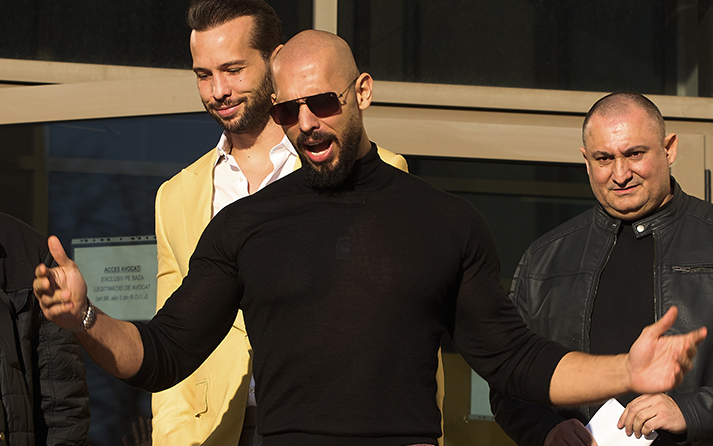
In arguments about his genuineness as a professional competitor, Andrew Tate’s kickboxing record is amazing and often quoted. Tate amassed 76 victories, nine losses, and one draw across his career. Twenty-three of his 76 victories were knockouts, a number that speaks not just to his dependability but also to his power.
His professional path has covered several weight divisions, and he battled for several promotional posters, including Enfusion and the International Sport Karate Association (ISKA). Tate frequently fights opponents abroad, adding diversity to his inside experience that sets him apart from other boxers limited to local or regional circuits.
In 2020 against Cosmin Lingurar, he won his final professional match by technical knockout in the second round. A fitting end to his life in the ring, this victory marked the end of a long and successful fighting career.
Arguments over Andrew Tate’s validity as a professional athlete frequently point to his remarkable kickboxing track. Tate amassed 9 defeats, 1 draw, and 76 victories over his career. Twenty-three of his 76 triumphs were knockouts, figures that reveal not only his power but also his constancy.
His professional life has seen him compete in various weight divisions and for many promotional banners, including the International Sport Karate Association (ISKA) and Enfusion, thereby bringing variety to his inside-the-ring experience, unlike many other boxers confined to regional or domestic activities.
His most recent professional fight against Cosmin Lingurar saw a technical knockout win in the second round in 2020. This win marked not only the end of a long and excellent fighting career but also a great conclusion to his life in the ring.
3. Championships and Titles
Perhaps the most ubiquitous claim Andrew Tate makes is that he’s a “four-time world kickboxing champion.” And, to some people’s surprise, that’s not a lie. Tate did, in fact, win four world titles as a kickboxer, primarily under the ISKA (International Sport Karate Association) and Enfusion banners.
His first significant world title was won in 2011 when he beat Jean-Luc Benoît in their eagerly awaited rematch. That win saw him take the ISKA World Full Contact Light Cruiserweight Championship. The fight was a pressure situation for Tate since he had lost to Benoît on points earlier. This time, however, Tate reversed the situation with a thrilling knockout.
Tate’s second ISKA world title in 2013 demonstrated his adaptability by coming in another weight class. After battling in an amazing tournament-style competition testing his capacity and endurance, he also claimed the Enfusion Live title that year.
Although kickboxing has several degrees of respect (e.g., K-1 or Glory titles usually rank at the top), ISKA and Enfusion are legitimate organizations acknowledged worldwide. His titles were earned in approved, difficult fights against deserving opponents.
Thus, even if his credentials are not from the greatest promotions like Glory, they are nevertheless seen as respectable accomplishments in the kickboxing community. His victory shows he was a genuine competitor, not only a flashy fighter.
4. Important Events and Famous Battles
Every fighter has defining career moments, and for Andrew Tate, there were some. Andrew Tate’s 2011 rematch with Jean-Luc Benot was among the most significant battles of Andrew Tate kickboxing career. Tate had lost on points in their first battle, a near and bitter loss. The loss galvanized him. Tate scored a stunning knockout triumph when they fought again, in that not only avenged his earlier defeat but also earned him his first global belt.
Another major battle was against Vincent Petitjean in 2013; Tate went the distance in a tough 12-round fight. Petitjean was a seasoned combatant noted for his technical skill and resilience. Tate’s victory underlined his stamina, tenacity, and ability to outperform a technically gifted foe.
Not every minute, meanwhile, was a success. His most challenging fight might have been in 2012 when he battled Sahak Parparyan for the It’s Showtime 85MAX worldwide title. Tate dropped the bout by decision, but many analysts who admired his bringing one of the best fighters in the division to his limits commended his performance.
These fights show not only his talent but also his mental fortitude. Usually entering as the underdog, Tate went out as a champion or at least with fresh respect from the kickboxing community. Learning from failure and coming back stronger turned into the trademark of his professional life.
5. Andrew Tate’s Fighting Method and Ring Strategy
The aggressive, confident yet controlled fighting approach of Andrew Tate mirrors his character. Unlike brawlers who use sheer strength to push their way in, Tate was a strategist. His strategic brain from his chess history allowed him to be very effective in the ring. Considering many moves ahead and modifying mid-fight, he often fought with a “mental chess” attitude.
Tate was an orthodox fighter physically, relying on a combination of high kicks, quick punches, and crisp counterattacks. He was recognized for effectively employing his reach, maintaining the opponent at a distance until he saw the perfect opportunity to attack. His knockout percentage shows he accurately exploited any opportunity he saw.
He was also a strong defensive guy. Tate rarely stormed into catastrophic interactions. Rather, he waited for the ideal time, laid traps, and used footwork to stay clear of danger. Among his strongest suits was his sense of timing—when to strike, when to back off, and how to alter the race’s pace.
His psychological edge set him apart more so than just his physical prowess. Opponents frequently felt annoyed or uncertain since Tate had already analyzed them. His mental as well as physical menace made him a more than bodily threat, as his ability to adapt and intellectual capacity enabled him to examine them.
6. Comparisons with Other Fighters
To assess Andrew Tate’s standard as a kickboxer fairly, it is useful to contrast him with other prominent fighters of his time and weight category. Although he was certainly skilled and won rightful world titles, he did not fight in the biggest-name promotions such as K-1 or Glory on a regular basis—organisations which hosted some of the world’s best talent, including Giorgio Petrosyan, Nieky Holzken, and Artur Kyshenko.
Tate’s resume is impressive, and his championships with ISKA and Enfusion are recognized, but many of the competitors who became stars of the sport achieved this after performances in front of the bright lights of giant arenas and international pay-per-view cards. Nevertheless, not all outstanding athletes have to compete at the Glory or K-1 level to be heard from. Tate found his niche within somewhat lesser mainstream circuits and swept those realms.
Unlike most fighters who have spent their entire careers exclusively on kickboxing, Tate was also engaged in other pursuits, even throughout his fighting career. This perhaps restricted his exposure to the best opponents on a regular basis, but also reflects his capacity to balance multiple interests effectively.
Essentially, Tate was a world-class fighter, extremely capable and successful, albeit maybe not quite on the same level as kickboxing legends, but at least a world-class fighter in the circuits in which he competed. The fact that he was able to win in several weights and come back from defeats demonstrates that he won his titles not through swagger, but through sheer skill and will.
7. Andrew Tate’s Transition from Kickboxing to Media and Business
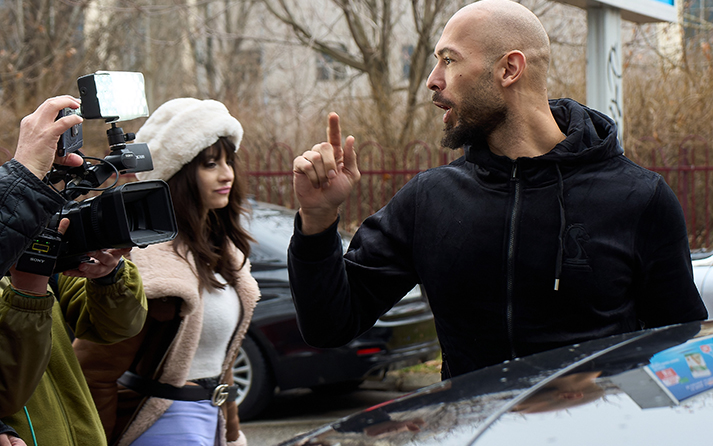
So what does one do when a fighter with a great kickboxing record exits the ring? In Andrew Tate’s instance, he didn’t retire quietly—he changed direction altogether. Having left the sport behind, Tate transitioned big time into media, business, and social media stardom. And let’s be real, it paid off. His name is everywhere today.
But what people might not know is that Andrew Tate’s kickboxing career contributed overwhelmingly to the construction of his brand. To this day, fans will mention the Andrew Tate fight record as a source of pride. “He’s a four-time Andrew Tate world champion kick boxer!” they’ll proudly exclaim, and that reputation counts both online and in business.
His transformation was not a coincidence. The self-marketing, confidence, and discipline he learned in the Andrew Tate kickboxing league easily carried over into his new career. The fighter mentality, combined with his fearless views, has allowed him to create a dominant media presence. You may or may not follow his streams, but one thing is certain—his Andrew Tate fighting record put him in the spotlight, and he has leveraged it to create a brand that can’t be overlooked.
8. Is Andrew Tate a Good Kickboxer?
Checking the Andrew Tate record, kickboxing enthusiasts often quote that the numbers look good. Andrew Tate’s record in kickboxing boasts dozens of victories and minimal losses. There are claims that he had years of an unbeaten streak. His fight record is not only good—it’s amazing by most metrics.
Physically, he possessed the build and strength. But beyond that, Tate’s mind was a part of his weapon. With a chess background, he infused every match with strategy. It was this that made Andrew Tate’s fighting record so impressive. He didn’t only punch hard—he strategized each move.
People sometimes ask, “Is Andrew Tate a good kickboxer, or is it just hype?” Well, compare him to others in the same Andrew Tate kickboxing league, and you’ll see he really did stand out. His opponents weren’t pushovers, and his wins weren’t easy. The Andrew Tate record shows a consistent, smart, and powerful fighter.
Yes, he’s never had an Andrew Tate UFC record or an Andrew Tate MMA record, but in kickboxing, he left his mark. If greatness is defined by performance, records, and influence, then yes, Andrew Tate was indeed a good kickboxer.
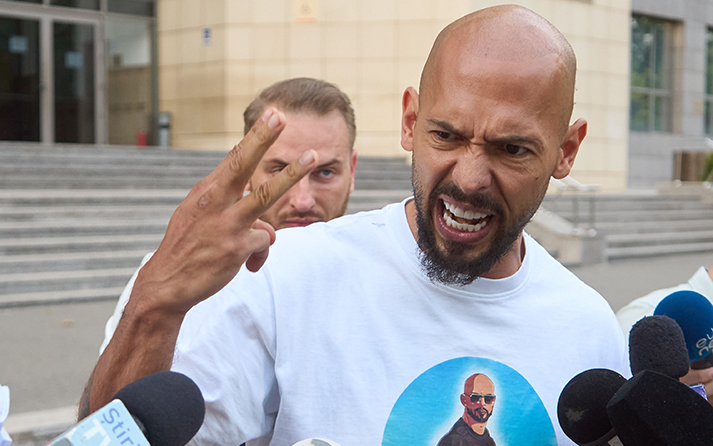
9. The Legacy of Andrew Tate’s Kickboxing Career
Now let’s discuss legacy. What exactly did Andrew Tate leave behind in the combat sports world?
Well, one, his Andrew Tate kickboxing career is arguably the most sensationalized aspect of his history. Despite his fame now far outpacing the likes of business and media, his fans and critics always turn back to the Andrew Tate record. Why’s that? Because it is outstanding. His success within the Andrew Tate kickboxing league helped forge the bold, adventurous image he now maintains.
Andrew Tate’s kickboxing record earned him people’s attention. Regardless of whether you agree or disagree with his online views, you can’t dispute the dedication and discipline it took to become an Andrew Tate world champion kick boxer. That’s not something small.
Let’s not forget—his Andrew Tate fighting record assisted him in designing how people perceive fighters beyond the ring. He employed his ability to inspire, provoke, and even educate (in his own style). Although he neither possesses an Andrew Tate boxing record nor an Andrew Tate UFC record, his contribution to kickboxing exists.
And how does his record hold up? It definitely holds up. His story continues to inspire young combatants, and his career still generates buzz. That’s what the power of a good record—and a loud mouth—is like.
Let’s Sum It Up
So, was Andrew Tate an incredible kickboxer? Get real—fairly so.
Looking back at Andrew Tate’s kickboxing career, the numbers don’t lie. His record is impressive. Whether you’re checking the Andrew Tate fight record or comparing him to others in the same field, he held his own. His style, strategy, and ability to win made him stand out in the Andrew Tate kickboxing league.
Now that he’s transitioned into business and media, his fighting career remains with him. Why? Because it established the tough, unafraid reputation people are familiar with today. Love him or hate him, Andrew Tate’s fighting career is one of the things that made him who he is.
And ultimately, that matters. He wasn’t simply a fighter—he was a champion.