


New to this? No problem. This guide breaks it down. Simple drills. Basic moves. Safety tips. No fluff—just what you need to get started.
Let’s go.
Kickboxing Basics: What You Need to Know
Kickboxing for beginners seems like wild hitting with brute force. But it’s not. You need safety and a solid foundation to build your game. First, you’ll learn to keep your body safe, and then you’ll have a solid base to build on.
Gear Up
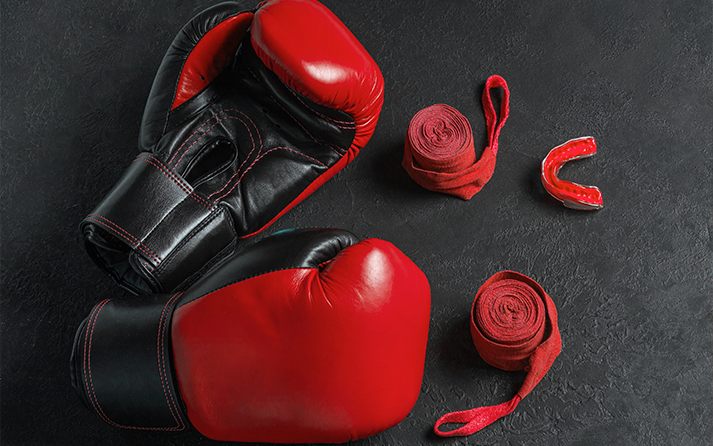
You need the right gear to train safely. Kickboxing is intense and unpredictable. You don’t wanna jump in the ring without protective gear. Get your gear right. Gloves protect your knuckles. Hand wraps keep your wrists from bending the wrong way. Trust me, a sprained wrist is no fun. Shoes?
Some gyms prefer you to go barefoot for a better grip, while others allow lightweight sneakers. Wear flexible clothes so you can throw kicks without feeling stuck.
The Stance: Your Foundation
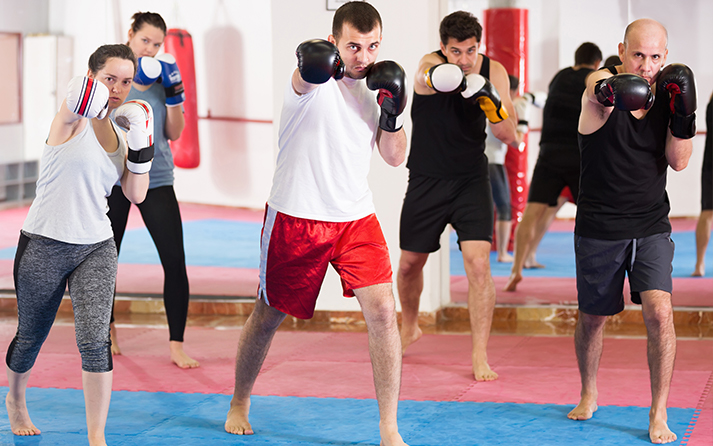
Your stance is everything. Stand with your dominant foot slightly back. The feet should be shoulder-width apart. Keep your knees soft—never stiff. Hands up, fists near your cheeks. Elbows in. Chin tucked. Stay light on your toes, ready to move. This stance keeps you balanced and ready to attack or defend in a split second.
Lock this in first. A solid stance makes every punch and kick stronger. Kickboxing for beginners starts with these two things: a solid stance and solid gear.
Related Article – Kickboxing Training Tips for Weight Loss and Fitness
Warm-Up Like a Fighter
Want to kick hard and punch fast? Warm up first. Skip it, and you’re setting yourself up for tight muscles, slow reactions, or worse—an injury that knocks you out before you start. A good warm-up gets your blood flowing, loosens up your joints, and preps your body for explosive moves. Fighters don’t risk training cold. Neither should you.
Here’s how to wake up your muscles the right way:
1- Jump Rope (2 Minutes) – This isn’t just to look cool. It boosts footwork, builds endurance, and gets your heart racing. Quick, light jumps. Stay on your toes. No rope? Fake it. Your body won’t know the difference.
2- Arm Circles & Shoulder Rolls – Stiff shoulders throw weak punches. Loosen them up. Big circles forward, big circles back. Roll your shoulders like you’re shaking off stress. Better mobility means faster, stronger strikes.
3- Leg Swings – Kicks come from the hips, not just the legs. Swing each leg forward and back, then side to side. Keep it smooth. This opens up your hip flexors so your kicks don’t feel like they’re stuck in the mud.
4- Light Shadowboxing – Now, put it all together. Hands up. Throw light punches and slow kicks. Focus on movement. This isn’t about power but getting your body into fight mode.
Beginner Kickboxing Techniques
Technique matters the most in combat sports. Wild hits won’t cut it. Work on your speed, precision, and control. Here are a few things that you need to do:
Punching Basics
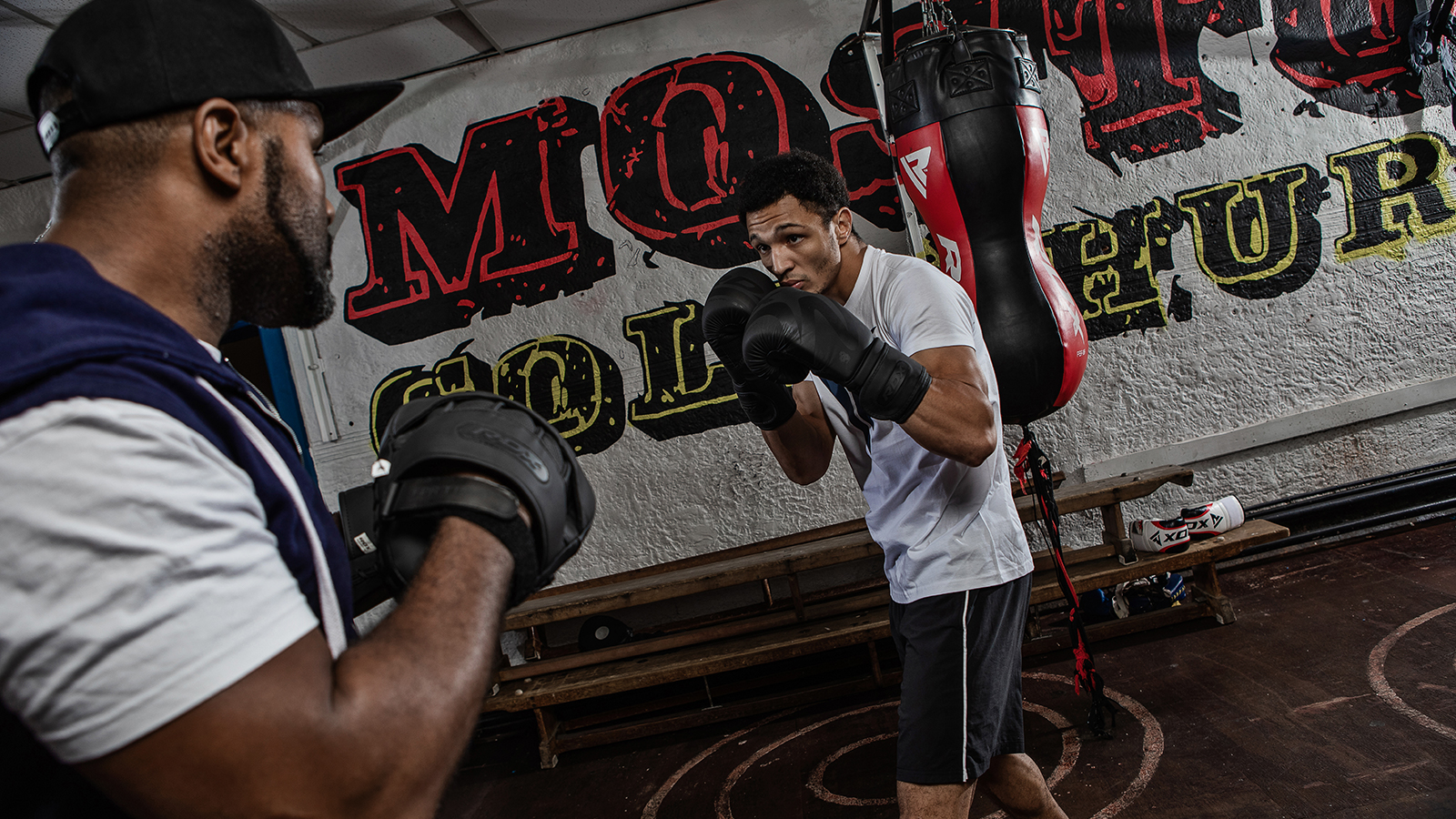
- Jab – This is your setup punch. Quick, straight, and snappy. Extend your lead hand, hit with your knuckles, then pull it right back. Keeps opponents guessing and creates space. Always reset your stance after throwing.
- Cross – Your power shot. This comes from your rear hand and packs a punch—literally. Turn your hips, push off your back foot, and let your fist drive forward. Aim straight for the target. More hip rotation = more force.
- Hook – A sideways punch meant to hit the jaw or ribs. Keep your elbow bent at a 90-degree angle, swing your arm in a tight arc, and pivot on your lead foot. Power comes from your core, not just your arm.
- Uppercut – Perfect for close-range strikes. Drop your weight slightly, then drive your fist up sharply. Your legs do the work—think of lifting an object from the ground with force.
Kicking Techniques
- Front Kick – Think of it as a push with your foot. Bring your knee up first, then extend your leg, striking with the ball of your foot. This kick keeps opponents at bay and can target the stomach or chin.
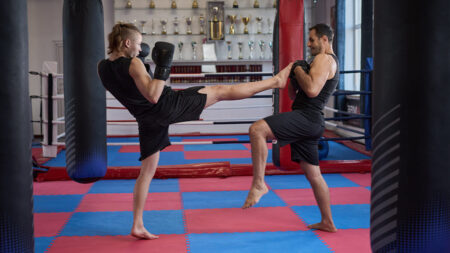
- Roundhouse Kick – This one’s a knockout move. Pivot on your standing foot, swing your back leg around, and hit with your shin, not your foot. More hip rotation = more damage. Aim for the ribs, thigh, or head.
Defensive Movements
- Blocking – Your hands are your shield. Keep them up, elbows in, and use your forearms to absorb punches. Don’t drop your guard, even when attacking. A good block can save you from a knockout.
- Slipping – Dodge punches without losing balance. Instead of stepping away, move just enough so the punch misses. Tilt your head slightly to the left or right as a punch comes in. Small movements make a big difference.
- Pivoting keeps you out of danger while staying close enough to counterattack. Turn on your lead foot to create angles and avoid incoming strikes. A well-timed pivot can turn defense into attack.
Simple Home Kickboxing Exercises
No gym? No problem. You don’t need fancy equipment to train like a fighter. You can sharpen your skills right at home with some space and the right mindset.
Shadowboxing – This is your best friend. Stand in front of a mirror or record yourself. Hands up, light on your feet. Throw jabs, crosses, hooks, and uppercuts. Add head movement, slips, and pivots. Imagine a real opponent in front of you. Stay fluid, stay sharp.
Household Punching Bags – Got a sturdy pillow? A couch cushion? Even a stuffed duffel bag? Hang it, hold it, or stack it against a wall. Practice controlled punches and kicks. Focus on form, not power—unless you’re cool with breaking your furniture.
Bodyweight Drills – Kickboxing needs speed, endurance, and strength. These bodyweight exercises keep you fight-ready:
- Squats – Power for kicks. Go deep, drive through your heels.
- Push-ups – Strong arms = stronger punches. Keep them explosive.
- Planks – A solid core keeps your stance stable. Hold it tight.
- Jump lunges – Boosts balance and leg endurance for those roundhouse kicks.
No excuses. Clear some space, get moving, and train like you mean it.
30-Minute Beginner Kickboxing Workout Plan
There are no complicated drills. No fancy moves. Just a solid, sweat-dripping, fight-ready workout. Let’s go.
Round 1 – Warm-Up (5 min)
Start light. Get your body loose.
- Jog in place (1 min) – Wake up those legs. Stay bouncy.
- Arm circles & shoulder rolls (1 min) – Loosen those punching muscles.
- Leg swings (1 min per side) – High front and side swings for flexible kicks.
- Light shadowboxing (2 min) – Move, throw soft punches, and feel the rhythm.
Round 2 – Basic Punches (5 min)
It’s time to get those hands working.
- Jab-cross (1 min) – Snap that jab, follow with a cross. Keep it sharp.
- Jab-cross-hook (1 min) – Add a hook for power. Pivot that foot!
- Uppercuts (1 min) – Stay low; drive up from your legs.
- Freestyle shadowboxing (2 min) – Put it all together. Move, punch, and flow.
Round 3 – Kicks & Knees (5 min)
Your legs are your weapons. Train them.
- Front kicks (1 min) – Snap them out, and reset fast.
- Roundhouse kicks (1 min per side) – Pivot, strike, and control the landing.
- Knee strikes (1 min per side) – Grab, pull, and drive your knee forward.
Round 4 – Defensive Drills (5 min)
Defense wins fights. Practice these movements:
- Blocking (1 min) – Hands up, absorb imaginary punches.
- Slipping (1 min) – Tilt left, tilt right. Just enough to dodge a hit.
- Pivoting (1 min) – Angle out, create space, counter fast.
- Freestyle defense (2 min) – Mix blocking, slipping, and pivoting.
Round 5 – Cardio Blast (5 min)
It’s time to push your endurance.
- Burpees (1 min) – Explode up, drop down, repeat.
- Jump squats (1 min) – Land soft, power up.
- Jump rope (1 min) – Stay light, keep rhythm.
- Freestyle cardio (2 min) – Shadowbox, jump, move—don’t stop.
Cool-Down (5 min)
- Stretch your legs, shoulders, and back. Hold each stretch for 20-30 seconds.
- Breathe deeply. In through your nose, out through your mouth. Relax.
That’s 30 minutes of power. Do this 3-4 times weekly, and you’ll feel the difference. Now go train.
Cardio Kickboxing Routines for Beginners
Want to burn fat, build endurance, and feel unstoppable? Cardio kickboxing is your answer. It’s fast, fun, and works your whole body—no boring treadmills required.
Why it works?
- Gets your heart pumping. Expect to sweat—A LOT.
- Burns serious calories. You’ll torch fat while having fun.
- Builds endurance. The more you do, the longer you last in a fight (or just life).
- Boosts coordination. Quick punches and kicks = sharper reflexes.
Beginner Cardio Kickboxing Routine (No Equipment Needed)
Each move: 30 seconds
Complete 3-5 rounds with 30 seconds rest in between.
- Jab-Cross Combos – Quick one-two punches. Keep your hands up, stay light on your feet.
- High Knees – Drive your knees up, and pump those arms. Faster = better.
- Front Kicks – Snap those kicks forward, alternate legs. Control your movement.
- Squat to Jab-Cross – Squat deep, pop up and fire off a jab-cross. Repeat.
- Burpees (Optional) – Want an extra challenge? Add burpees at the end of each round.
- Cool-Down – Walk around, shake it out, and stretch your legs and shoulders.
Do this 3-4 times a week, and you’ll see a difference in stamina, speed, and power. Now, hit it!
Related Article – Workout at Home. Warm Ups, Jump Ropes, Pull Up Bars, and Dip Bars.
Kickboxing Safety Tips for Beginners
Want to train like a fighter without getting sidelined? Safety comes first. Bad form, weak wrists, or skipping warm-ups can lead to injuries that slow you down.
Form is Everything
Sloppy punches and weak kicks don’t just look bad—they can cause injuries. Always keep your hands up, pivot your feet, and engage your core. Power comes from technique, not force.
Protect Your Wrists & Ankles
- Wrap your hands properly before every session. It keeps your wrists secure.
- Choose the right gloves. If they’re too loose or too tight, you risk injury.
- Warm up your ankles with light jumps and rotations to avoid sprains.
Train Smart, Not Reckless
- Listen to your body. Sharp pain? Stop. Fatigue? Take a break.
- Overtraining leads to burnout. Give yourself time to recover.
- Keep your hydration levels up. You’ll feel cramps, dizziness, and slow reflexes if you are dehydrated.
Stay Flexible
- Stretch before and after training. Stretching makes you flexible. Tight muscles limit movement and even your power. Stiff muscles also cause injuries and inflammation.
- Focus on your legs, hips, and shoulders. Keep these parts mobile and flexible for excellent performance.
Tracking Progress & Staying Motivated
Progress isn’t just about hitting harder—it’s about staying consistent. Here’s how to keep improving:
Keep a Kickboxing Journal
If you are keeping track of things, you stay motivated and invested. Keep a journal for all that you do in your kickboxing journey. This will keep you on track.
Set Goals
- Short-term: Master a clean jab-cross combo or land 50 kicks in a row.
- Long-term: Build endurance, increase power, or even step into a sparring session.
Find a Support System
When you do things alone, you’ll leave them too soon. Join an online kickboxing group, find a local gym, or train with a friend. You’ll stay motivated automatically.
Conclusion
Kickboxing builds muscle, burns fat, and makes you faster, sharper, and tougher.
Perfect the basics and keep your body in shape and the right fighting mode by stretching and exercising regularly. The next best thing to do is to be consistent in all the good things you do in your kickboxing for beginners journey. When you do things daily, you start doing them correctly.
Lastly, It’s about control. Confidence. Power. So lace up, step up, and keep swinging. You’ve got this.